Friday, December 24, 2021

Christmas Eve, 2021-C: What we are celebrating

 Lectionary: Isaiah 9:2-7, Psalm 96, Titus 2:11-14, Luke 2: 1-20


En el nombre del Dios, que es Trinidad en Unidad. Amen. 

There’s a meme floating around social media of the Flintstones wearing Santa hats and celebrating in front of a decorated Christmas tree. The meme asks: “Seriously - what are they celebrating?” 

It’s a fair question… even for us today. What are we celebrating?

At Christmas we celebrate that God took on human form in the person of Jesus, eliminating all that had separated us, and reconciling all humanity to God. This new relationship, a divine-human union, happened on that first Christmas and happens still today because as we said in Advent: Christ is coming. “Christ is always coming… always entering a troubled world, a wounded heart.” It’s an amazing thing, a miraculous event, and definitely something to celebrate.

Even with the pandemic happening all around us still (and God knows how tired we are of that!), we want to celebrate together. We want to worship, share holy Communion, and sing Christmas hymns. We want to eat good food, drink good wine, share stories, hugs, and build memories. We want to celebrate together as the beloved community of God!

So today, we gather in-person and online, to celebrate the birth of the Savior of the world. It’s a great story – the greatest one ever told, they say.

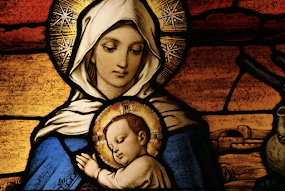
According to the Gospel writer, Joseph, who is descended from the house of David, must travel to Bethlehem to register in accordance with a decree from Caesar Augustus. Mary, who is engaged to Joseph, is pregnant and near delivery.

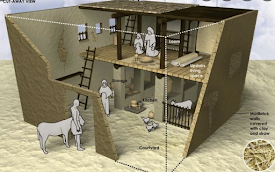
Ordinarily, travelers like Mary and Joseph would have stayed with family or friends who live in the area, but they arrive to find “there was no room for them at the inn.” We need to remember that in first-century Palestine, an inn was not a hotel. It was the guest room in a typical peasant house.

Some houses had upper rooms, like the one the disciples hid in after Jesus’ crucifixion. Most houses had lower rooms, rooms below the main living quarters where the animals were kept. Mary and Joseph were basically sent down to the basement where the animals were. Imagine having to give birth there.

It’s very likely that Mary and Joseph were being shunned by their family and friends who didn’t approve of Joseph showing up with his pregnant girlfriend. To them, Joseph was violating the law by staying with Mary, rather than putting her out and letting the community stone her to death for adultery.

People looking at Joseph and Mary saw sinners, but God saw partners in redemption. The sad part is, how many people continue to miss the miracle of Christ coming into a troubled world and wounded hearts because they’re too busy moralizing…?

The judgment of God, who is the only real moral authority – is (are you listening?) salvation for the whole world. And this salvation is in Jesus the Christ whose birth we celebrate today.

By taking on flesh Jesus linked heaven and earth, eternity and time, from ages past to this present moment,

reconciling us to himself and ensuring that everyone is included in God’s plan of salvation… the clean and the unclean, the Jew and Gentile, the saint and the sinner.

There are some people who would limit God’s grace only to those who deserve it (as they define that, of course). Well, the truth is, none of us deserves it, yet all of us receive it, because that is the nature of the extravagant love of God.

Luke affirms this in his telling of the Christmas story. The first to hear of the birth of the Messiah were some shepherds. It’s a peaceful, pastoral scene in our imagination: shepherds sitting under a star-filled sky keeping watch over their sheep.

We’re all fans of the shepherds, aren’t we? They were simple, hard-working, regular folk. We’re simple, hard-working, regular folk. We feel like we can identify with them… but we need to remember that in that time, “shepherding was a despised occupation…they were scorned as dishonest people who grazed their flocks on other [people’s] lands.” Shepherds also didn’t bathe much so they didn’t smell good; and this particular group of shepherds was the lowest of the low – the ones working the graveyard shift.

But God, who sees differently than the world does, chose these lowly shepherds to see the glory of the presence of God, which, Scripture tells us, shone all around them. God chose them to be the first to hear the angel’s proclamation of good news of great joy for all the people.

Today, we celebrate that we are the ones God is choosing to see the glory of the presence of God all around us. We are the ones God is choosing to be God’s partners in the plan of redemption.

We celebrate that the light of God’s love fills us to overflowing and, like those shepherds, we can’t help but share this good news of great joy. As Mother Theresa of Calcutta once said, “If you know how much God is in love with you, you can’t help but live your life radiating that love.”


Seriously, this is what we are celebrating. 
The good news of Christmas is our present reality. It isn’t just an event in ancient history or a great story. Christ is being born in us again right now.

So, let’s celebrate that, singing out our praise: Glory to God in the highest heaven! For unto us is born this day a Savior, who is the Messiah, Christ the Lord. 

Amen.

Sunday, December 12, 2021

3 Advent, 2021-C: Welcoming joy

 Lectionary: Zephaniah 3:14-20; Canticle 9; Philippians 4:4-7; Luke 3:7-18 


En el nombre del Dios que es Trinidad en unidad. Amen. 

The Third Sunday of Advent is known as Rose or Gaudete Sunday, hence the pink vestments. It’s one of my great joys that while the church pushed women out for centuries, it kept pink as a liturgical color. So, now we get to see the girl color, recognize the value of the feminine and associate it with joy! Pink means something different for us than it did for them - but I’ll bet the church fathers didn’t see that coming!

The word 'gaudete' comes from the Latin and while we translate it as “rejoice,” it literally means 'to welcome and to be filled with joy.' On this Sunday, we make an intentional choice to welcome the joy God is waiting to give us – joy that anticipates the redeeming love of God; joy that trusts that nothing is impossible with God.

We rejoice that we have been redeemed by the forgiveness of our sins, so anticipating our promised reconciliation, we commit during Advent, to honestly discover where we have gone astray in our lives, our faith community, and our world. We can’t repent, that is, change our minds or our direction, if we don’t know where we’ve sinned.

A great tool for this is the Rite of Reconciliation of a Penitent, what some call “Confession” as an Advent practice. I’m happy to talk about this with anyone who wants to know more about it or make an appointment.

So, let’s talk about sin for a minute. When people come to me to “confess” their sins, they often tell me what they’ve done that is wrong. That isn’t the sin, I tell them. That’s the evidence of sin.

Sin is separation where there should be relationship, disruption where there should be union, and opposition where there should be harmony and it happens deep within us, in our hearts. Sin disrupts our relationships with God, one another, and ourselves. The evidence of our sin is the behavior that results from that disruption, behavior that is self-centered, harmful, or disrespectful.

In our Rite of Reconciliation, we look deeply within and see where this disruption has happened, and where the reconciliation Jesus promised us needs to happen again, remembering that it is by the power of God’s bountiful grace and mercy that we are restored. The words of absolution, spoken out loud, initiate that restoration, and it’s a powerful experience.

Sin is part of our lives, and sometimes, when we allow ourselves, we realize just how messed up things are. For instance, how do we faithfully and justly deal with the racism, sexism, homophobia, and other sins built into our systems? I was chatting with a deacon friend recently who does this work and she tells me that finding an unhoused person shelter for the night right now can be a frustrating endeavor – and she knows the system! Imagine how impossible it must be for someone without a knowledgeable advocate!

Our Collect today reminds us that sometimes we need a hero; someone who has the power to make things different… better; to restore justice where there is none. Sometimes we just need to know there is power out there that can set right what has gone wrong.

Zephaniah talks about God as a “warrior who gives victory” but let’s not overlook how that victory is described. Speaking through the prophet God promises to rejoice over us with gladness, to renew us in God’s love, and to exult over us with singing. God promises to redeem disaster, deal with our oppressors, save the lame, gather the outcast, and change our shame to praise. This is what victory looks like, and it is truly cause to rejoice.

Paul affirms this in his letter to the Philippians saying, rejoice because “the Lord is near.” We don’t need to worry about anything. Pray and give thanks, he says, because we are assured that all will be well, and our assurance feels like peace – peace in our bodies, our minds, and our spirits. Peace that makes no sense, because it is a peace that trusts completely in God, whose power of abundant grace and mercy leads us to the victory Zephaniah described.

So, today, we welcome God’s joy and let it fill us to overflowing whereupon it will spill into the world.

What, then, do we make of this Gospel reading? The first thing John the Baptist says is, “You brood of vipers! Who warned you of the wrath to come?” It feels kind of like Scriptural whiplash, doesn’t it? But it does make sense and it is good news.

John’s essential message was: change the way you’re thinking, believing, and acting because the Messiah is coming – and it won’t be like what you think. In fact, as it turned out, Jesus’ Messiahship wasn’t what John the Baptist thought either. Jesus didn’t bring salvation just to his own people, but to all people for all time, and he brought it by the forgiveness of sins, that is, Jesus restores relationships that have been separated, unity where there is division, and harmony where there is discord. 

John the Baptist knew that he was chosen by God to herald the coming of the long-awaited Messiah. He knew that God’s people needed to repent because the Messiah was bringing the Spirit’s renewing fire, but even he didn’t know how radically different God’s plan was going to be from his own expectations. None of us does – something to keep in mind as we journey together through this Advent into the next chapter of our life as a faith community. 

Thomas Merton once said: “You do not need to know precisely what is happening, or exactly where it is all going. What you need is to recognize the possibilities and challenges offered by the present moment, and to embrace them with courage, faith, and hope…” and I would add – with joy!

On this Gaudete Sunday, we welcome all that God is waiting to give, knowing that God’s plan for us and for the whole world is a plan of love, full of bountiful grace and mercy - and that we have been chosen by God to proclaim that Good News to the world.

How can we be anything else but filled with joy? Gaudete! Rejoice! 

 Amen.

(Image of John the Baptist, by El Greco)


Sunday, November 28, 2021

1 Advent, 2021-C: Welcome the redemption

Lectionary: Jeremiah 33:14-16; Psalm 25:1-9; 1 Thessalonians 3:9-13; Luke 21:25-36 


En el nombre del Dios, que es trinidad en unidad. Amen.
The familiar Advent theme of keeping awake or being on guard, as Jesus says it in today’s gospel, derives from apocalyptic literature about the end of times, a common fear among humans found in most cultures throughout history. For Christians, however, the feared and dreaded judgment has already happened -- and it was redemption. God chose to come among us as Jesus, the Christ, who is always coming, always redeeming.

This is our Good News to share - that there is nothing to fear about our personal deaths or the end of the world as we know it, which, as I said recently, has already happened over and over again in our history, with new life emerging from the present death. Each time it happens, however, the distress among nations and cosmic signs of doom and destruction impact the people in that time and they “faint from fear and foreboding.”

When that happens, Jesus says, stand and look up, and remember the promise of redemption. Then he told the parable of the fig tree. You know how to read the signs, he says. When you see the leaves of the fig tree sprouting, you know that the warm, fruitful season of summer is coming. Likewise, when you see the tribulations on earth and the cosmic signs of destruction, YOU will know that it means the kingdom of God is drawing near.

These things are the signs that the promise of redemption, new life out of death, is about to be fulfilled again. It always will until all of creation is reconciled to God. So, stand up, look up, and welcome the redemption, be part of it! Don’t miss the opportunity by numbing yourself into a slumber of denial. There is nothing God can’t or won’t redeem.

Everyone who lives on the earth will face these moments of choice so be alert and pray that when it’s your turn, when you see the cosmic signs of destruction, you don’t lose hope. When you see the distress among nations, you don’t bury your head. Look up! Stand up – for you stand in the presence of the Son of Man.

Our humanity guarantees that there will be times we’ll be going through life as if in a slumber. Many of you have heard me talk about our COVID reawakening as we cautiously reopen our churches and ministries. It’s as if we’ve all been in a slumber on many levels. The shutdown put a stop to all of our busyness at church, at school, at work. As ministries began to open back up we had to figure out how to pick up these ministries and do them in the world as it is now – which is different than it was before, and thanks be to God for that!

Our COVID slumber gave us the gift - or burden - of time to look deeply and critically at ourselves and our world, and some of the revelations have been unsettling and led to tough questions like: how do we establish fair and living wages for all? How do we teach a history that is honest and doesn’t revise or eliminate inconvenient truths? How do we adapt our practices to honor and respect the limited and sometimes dying resources in creation?

It isn’t news to anyone anymore that people of color, particularly African Americans, are arrested, convicted, and imprisoned at much higher rates than whites. It’s also not news anymore that there is a real thing called the school to prison pipeline which the National Education Association says has “resulted in the suspensions, expulsions, and arrests of tens of millions of public school students, especially students of color and those with disabilities or who identify as LGBT.” (Source) How do we change this? 

 How do we make amends to today’s descendants of slavery or to the indigenous peoples forcibly driven from their homelands? We haven’t even figured out how to talk about this yet without shame, blame, recrimination, and defensiveness. These revelations of our reality seem too big, too complicated, too impossible to solve – and they are for us, but not for God.

I submit that the problem we face is not that we have fallen into a numbing slumber of denial or dissipation, but that we choose to remain stuck in it. We can’t or won’t “wake up” out of self-interest, or fear, or a sense of powerlessness, or guilt, or dread. We choose to numb ourselves with dissipation and drunkenness to escape dealing with the tribulation in our world, our responsibility for it or our continuing complicity in it.

In the season of Advent, we are called to wake up, stand up, and look up because the coming of Christ isn’t a thing to dread or avoid. It’s a joy, a relief, a gift!

Jesus said, God did not send the Son into the world to condemn the world, but in order that the world might be saved through him (Jn 3:17). He also said that he would not leave us orphaned (Jn 14:18). He will stand with us always until God’s plan of redemption is fully and completely accomplished.

This also isn’t something that happens once on some mysterious unknown day. The Spirit of Christ is alive, eternally alive, and dwells in us, so of course, Christ is always coming, always redeeming.

The trap Jesus warns us about is hopelessness. When we forget the compassion and love of God for us, when we think we are left alone to deal with the tribulation around us, we will, of course, descend into hopelessness.

So our mission during Advent (should we choose to accept it) is to remember and reconnect with Jesus who is our hope. We do this by choosing to stop, pray, and awaken to the eternal truth that Jesus is coming, that Christ is always coming, entering a troubled world and our wounded hearts, bringing peace, mercy, love, and healing.

God bless us all as we practice a holy, transforming Advent. Amen.

Sunday, November 14, 2021

25th Pentecost, 2021-B: A new relationship with God in Christ

 Lectionary: 1 Samuel 1:4-20; 1 Samuel 2:1-10; Hebrews 10:11-14 (15-18) 19-25; Mark 13:1-8 


Our Collect today is one of my favorites because it speaks of a fully embodied reception of the grace offered to us in Scripture. We pray that we will listen with the ears of an open spirit, to read with the full

power of our intellect, to mark the preeminence of our Holy Writ, and – here’s my favorite part – to inwardly digest them. 

It’s such a Eucharistic turn of phrase. We pray to God to support us as we take in the Scriptures and make them part of our bodies and souls just as we take in the nourishment of the holy food of Communion.

The fruit of doing this is that we are enabled to embrace the hope of everlasting life and hold fast to it, no matter what we see and experience in the world. This reminds me of a short poem about embracing hope: 
“Hope is a state of mind not
dictated by what appears
to be: a promise
built on faith.


We look beyond
fear. And begin to trust
what we do not yet see. 

We listen
for though we prepare
and plan
and strive to organize, Love
will take us in
a new direction, a re-birth
beyond our comprehension.

In prayerful surrender
we can be true
to who we are
and trust and continue
and become
truly ourselves.”     © Valori M. Sherer, 2009. All rights reserved
Hannah had a gift for prayerful surrender, and by it, she became truly herself: a daughter of God, a mother, and a model for us all on perseverant prayer. The continuing BLM Vigil of Solidarity on Friday nights is a perfect example of this in our community.

Hannah was barren and though her husband adored her, she was tortured and nettled by his other wife who was able to bear him children. This went on year after year, yet Hannah kept praying.

What’s interesting about this story is that Hannah was praying silently - something that just wasn’t done. Back then all prayer was said aloud. In fact, Hannah’s prayerful behavior was so strange that Eli thought she was drunk! The clarity of Hannah’s reply to him, however, convinced Eli that Hannah wasn’t drunk and he joined his prayer to hers.

This is where the power and importance of corporate prayer were revealed for us to hear, read, mark, learn, and inwardly digest. When Hannah and Eli joined their prayers together, the mountain was moved, so to speak. The impossible became possible. The hope became a reality.

Corporate prayer always dispels the loneliness of suffering. This is something we learned all over again during the worst of the COVID shutdown last year. When the opportunity to pray together was taken from us, we realized just how much we missed it – how much we needed it.

Hannah prayerfully surrendered, joined her silent prayer to another’s, and clung to the hope of a reality she couldn’t yet see. It wasn’t long before Hannah found her life heading in a new direction as the mother of the prophet, Samuel.

Her proclamation of faith and joy in the response to our Old Testament reading is so powerful it gives me chills. It also may seem familiar – it is the source from which Jesus’ mother, Mary, borrowed her prayer – the one we call the Magnificat found in the gospel of Luke (1:46-55).

“My heart exults in the Lord…” Hannah exclaims, by whom the weapons of the mighty are broken… the full are left wanting and the hungry are beyond satisfied… by whom empty wombs are filled and the poor are made rich… by whom the needy are celebrated, honored and respected. It’s the foundational social justice prayer in our Scripture.

That last bit of Hannah’s prayer, the part about the wicked adversaries, was probably added on later by an editor – a bit of Biblical mansplaining. Their goal was upright anyway, declaring the power of God to judge and to empower the anointed, in other words, the king of Israel, whom Samuel would one day anoint.

All of this points to a new way of being in relationship with God, which is exactly what Jesus is talking about in the gospel. As Jesus and his disciples are leaving the temple in Jerusalem, the disciples marvel at the spectacular temple complex with its huge foundational stones. One commentator reports that “Archeologists… uncovered individual stones as large as 42 x 11 x 14 feet… weighing as much as 500 tons… The white marble is adorned with gold outside and shines blindingly in the sunshine. The inside is adorned with gold, silver, crimson, purple, and finely polished cedar. Great columns support a high ceiling. It is truly one of the wonders of the world. Even more significantly for the Jewish people,” this commentator says, is that this temple “is the place where God makes his earthly home.” (Source: Dick Donovan, SermonWriter.com)

In response, Jesus clarifies for them the new way of being in relationship with God he is inaugurating by his life and impending death and resurrection. See those great stones, he asks? They’re all about to be destroyed.

Some believe that this statement cost Jesus his popular support. His prediction of the destruction of the temple may be why Jesus’ triumphant entry into Jerusalem turned into an angry mob calling for his crucifixion.

But Jesus wasn’t kidding. The temple would be destroyed. God, however, isn’t in the temple so the people needn’t lose hope. God is in me, Jesus says, and because God is in me, God is now also in you.

Jesus, the Incarnate Word of God, reconciled all humanity to God, removing the barriers between God and us. The barrier we must remove is our unbelief.

This was prophesied long before Jesus showed up, yet somehow, folks had trouble connecting the dots, so the author of the letter to the Hebrews does it for them quoting the prophet Jeremiah (31:33): “This is the covenant that I will make with them after those days, says the Lord: I will put my laws in their hearts, and I will write them on their minds.”

In the New Covenant, given to us by our Savior Jesus Christ, God dwells within us, in our very bodies and souls. At every Holy Eucharist, we remember this by eating and drinking the holy food of Communion and literally digesting it. The spirit of Christ is literally and spiritually in us. We are the dwelling place of God.

Does that mean temples and churches are no longer needed? Not at all! Hannah’s story makes abundantly clear the necessity of gathering for corporate prayer and our experience tells us that we need continual nourishment of Word and Sacrament.

What’s different now is that whatever suffering we witness or experience: war, famine, earthquakes, racism, a pandemic - we know it isn’t the end. The “end of days” so habitually understood to be the end of the world as we know it, doesn’t exist. The world as it was known has ended and been reborn over and over again – and thanks be to God for that! That’s what resurrection is: new life from death - in Christ Jesus - and therein is the hope we hold fast to.

Jesus said, do not be alarmed, … all of this is just the beginning of the birth pangs of a new life, a new world because the redeeming love of God is never absent from our circumstances. How can it be when God dwells in us?

So, with prayerful surrender, we trust, and continue in God’s love in every situation, every personal and global suffering, clinging to the blessed hope of everlasting life, given to us in our Savior, Jesus Christ. Amen.

Sunday, October 24, 2021

22nd Pentecost, 2021-B: A promise of wholeness


Lectionary:Job 42:1-6, 10-17; Psalm 34:1-8, (19-22); Hebrews 7:23-28; Mark 10:46-52


In our Collect today, we prayed, “increase in us the gifts of faith, hope, and charity; and, that we may obtain what you promise, make us love what you command.” So, the first question is, what does God command? 

Jesus simplified the answer to that for us: We are to love God, and love neighbor as ourselves with all our heart, mind, and strength. When we do that, when we love like that, we will obtain all that God promises. The Collect isn’t offering a conditional but a description of outcomes. It might have been better said, when we love as Jesus commands, we will obtain the promises of God.

The next obvious question, then, is what does God promise? The simple answer is wholeness. God promises wholeness, unbrokenness, completeness, perfect harmony, balance, peace, and unity in our bodies, our relationships, and our eternal life.

Where we don’t experience wholeness there is healing left to do. Our gospel story from Mark is about healing, but it’s more than just physical healing. It’s about wholeness.

In Jesus’ day, blindness was considered punishment for sin, either the man’s or someone in his family. Bartimaeus, the blind man would have been ostracized by his community, so his only option for survival would be to sit by the side of the road and call out to passersby for mercy in the form of food and sometimes clothing needed to protect him from the elements.

When he hears Jesus and his followers approaching, the blind man does his thing, calling out for mercy. The gospel says, that when he heard it was Jesus of Nazareth coming near, he shouted out, “Jesus, Son of David, have mercy on me!”

Son of David, he shouted. Bartimaeus knows this is no ordinary passerby, and he shouts his proclamation of faith that Jesus is the Messiah of God.

Despite everyone’s attempt to shush him, Bartimaeus persists. In response, Jesus stopped and stood still. This would be like us stopping our morning commute to have a conversation with a beggar at a traffic light. People around us aren’t going to love that. But the community around Jesus called to Bartimaeus and told him “take heart, get up,” and come near.

The followers of Jesus (who are us today) offered hope to the hopeless and encouraged him to draw near to Jesus. Since he is blind, that wouldn’t be an easy task for Bartimaeus, but Mark tells us he threw off his cloak, jumped up, and went to Jesus.

Two things to notice about the cloak. First, it was probably one of the few things Bartimaeus had and he probably used it to hold and transport his handouts, so it would have been of great value to Bartimaeus. Second, in Mark, cloaks often represented the old order, so tossing off his cloak meant Bartimaeus let go of what was and ran toward what was possible in Christ.

By standing still, Jesus enters into relationship with Bartimaeus, something few others had probably done. He was, after all, just a beggar who most would just pass by. But Jesus doesn’t. He stops and asks Bartimaeus, “What do you want me to do for you?” Isn’t that an interesting question?

Most people would assume they know what a beggar wants, but Jesus isn’t entering relationship with a beggar. He’s entering relationship with Bartimaeus, who is a beggar, and that’s a big difference.

Bartimaeus asks for healing, not food. What an amazing profession of faith – the second one from this poor beggar. Bartimaeus doesn’t ask for a handout. He asks Jesus for wholeness.

Reading this story today, Bartimaeus’ request makes sense to us. We know Jesus is God Incarnate. We know he has the power to heal, to forgive, to restore. But all Bartimaeus knew was what he over-heard passersby saying about Jesus as he sat by the road.

How did Bartimaeus know Jesus was the Messiah? Even his disciples didn’t understand this yet – and they’d been with him for almost three years now. How did Bartimaeus know Jesus could heal his blindness when only God could do that? What made him ask such an audacious request?

Faith. Bartimaeus had faith that in Jesus he could be made whole - restored in his body, restored to his
community, restored to relationship with God.

“Go,” Jesus says to him, “your faith has made you whole.” But Bartimaeus didn’t go, did he? Instead, he followed Jesus. This was the new order Bartimaeus took up in his life, leaving behind what was.

Bartimaeus’ actions teach us about healing in our time. God offers wholeness to us every time we ask, and sometimes even before we ask. Sadly, so many don’t get up, throw off what was and move toward what’s possible in Christ.

What if Bartimaeus had sat back down after Jesus healed him, picked up his cloak, and returned to begging by the roadside? It isn’t as far-fetched as it sounds. He had no job skills, no community support, and no prospects for anything different.

This brings to my mind New Year’s resolutions. How many times do we make a plan to embark on a new path, a new, healthier way of being, only to find ourselves exactly where we were on December 31 just a couple of months later?

Change is hard. Life-altering change is even harder.

God won’t force anything on us - not even grace. But we have been encouraged by others before us in the church to draw near to Jesus. There our eyes are opened to see the value God has for us – all of us. There, in the presence of the love that created, reconciled, and heals us, we have the audacity to ask for what we need. There, we are made whole.

Healing, like love, is an exchange. Its source is always God. This exchange is free, freely given, freely moving between and among us. It changes us, our community, and the world, but like Bartimaeus, we must get up, toss off what was, and follow the way of Jesus into what is possible.

Let us pray: 

God of all, Loving Healer, we thank you for those persons who gave us hope that in you we could find healing and wholeness. We are ready to receive it. Open our eyes to see the love you have for us – all of us. Increase our faith that we may be audacious in our asking. Let our compassion for others be a reflection of your compassion for us, that we all may be made whole in our bodies, our relationships, and evermore in our eternal life in you. Amen.

Sunday, October 17, 2021

21st Pentecost, 2021-B: Servants of all

Lectionary: Job 38:1-7, (34-41); Psalm 104:1-9, 25, 37b; Hebrews 5:1-10; Mark 10:35-45  

How well do we listen? So often when we have conversations, we can tell the person we’re talking to isn’t listening as much as preparing their response or formulating their next point. You can see it on their face. They’re looking at you, but not really listening.

Servant listening, as I call it, is listening deeply, with the speaker as the priority. Servant listening is listening attentively, taking in what the speaker is saying, even when it’s hard to hear or accept.

In our gospel reading today, Jesus has already told his disciples of his coming suffering and death three times. This last time (in vv 33-34) Jesus goes into horrible detail about being condemned to death, mocked, spat upon, flogged, and killed, then after three days rising again (10:33). He had also just taught them - twice - what greatness is in the kingdom of God, both times saying, the first must be last and the last must be servant of all.

It appears, James and John, the sons of Zebedee, weren’t listening. Maybe they were listening - the way so many listen to the voice of God even today: “yeah, but not really.” Love your enemies: yea, but not really. Turn the other cheek: yeah, but not really. The first will be last and the last will be first: yeah, but not really.

Glory and honor, position and prestige are still things we strive for – just as the disciples did. As one commentator said: “Personal ambition did not start with James and John, nor did it end with them.” (Source: Dick Donovan)

Every time I read this passage, though, I wonder why no one asked for a pause or explanation after Jesus said: “and after three days he will rise again.” We read that knowing he’s referring to his resurrection at Easter, but the disciples didn’t know that was coming. How could they have? Who could have imagined the resurrection?

So, listening with their “yeah, but not really” ears, James and John skip right over that intense statement and drop back into planning for the Messiah they still hold onto – the one who will defeat the Romans, giving the people of Israel a military victory and freedom from occupation.

Make us your top brass, James and John say, and we’ll do right by you. Never mind that their request squeezes their friend, Peter, out of his top-ranked position among the twelve.

Will you, Jesus asks? Can you? You have no idea what you’re asking. You still don’t understand me or what Messiah means. Can you drink the cup I will drink? The one I just described: the cup filled with shame, torture, and death? Will you allow yourselves to be submerged in this path of Messiahship, giving up your life as I am about to give up mine?

Yeah, but not really, right? Sure we can, they reply.

Interestingly, what the ten took away from this discussion wasn’t about Messiahship or servanthood. They skipped over Jesus’ powerful, tragic statement and instead, focused on James’ and John’s subterfuge, and the new pecking order that might create.

You can practically see Jesus rolling his eyes and sighing as he called them together – again – to clarify his teaching on greatness and leadership in the kingdom of God. Don’t be like the non-believers, he says. They hold their power over others as a weapon. You must use yours to serve, and you must serve everyone. “For the Son of Man came not to be served but to serve,” and to give his life in order to set God’s people free.

It’s comforting to me that even though the disciples still aren’t getting it, Jesus is still planning to entrust the continuing work of his ministry of reconciliation to them. It bodes well for the church today.

One of the greatest lessons (?) challenges (?) I learned from one of my mentors was the spiritual practice of humility, which often sounds like this: ‘I could be wrong,’ or at least, ‘I might have an incomplete picture.’

No one has the complete picture except for God. That is what our readings from Job and the Psalm offer us today. God is God and we are not.

Practicing humility might have prevented James and John from asking for glory for themselves, rather than for those they were about to serve. Practicing humility can help church folks today avoid the: ‘we have to do church my way, and if we don’t, I’ll take my money and myself outta here’ problem.

Practicing humility can help us remember that we often don’t have all the information about a situation or event, so we may not be able to see the big picture. Sometimes our bishop can, sometimes not, but God always can. God, who laid the foundation of the earth and determined its measurements, is constantly creating the big picture, responding in mercy and love to all of us as we attempt to navigate our time on earth.

The church Jesus built upon Peter, the Rock, who was supremely human and definitely didn’t have the whole picture, has been guaranteed to stand – even against the gates of hell (Mt 16:18), so I don’t worry about that. What concerns me as a pastor, is that our church, which is the living continuation of the church Jesus built, takes advantage of the gifts God has brought together in this time and place to serve as we are called to do.

The ministries of each church are continually formed by God to serve their membership and the people in their corner of God’s kingdom. To serve well, every church needs people who pray like St. Monica, mother of St. Augustine of Hippo who was a rogue before he was a bishop. We need people who proclaim the Word like St. Peter or our Presiding Bishop, Michael Curry (who probably had very different styles).

We need some who will advocate for justice like Jonathan Daniels did, and others who reconnect us to God in creation, like St Francis did. We need traditionalists and progressives, folks who make meals, administrate programs, and teach our children serving alongside others who practice hospitality and manage money.

Granted, this kind of diversity often makes for messy or challenging church politics, but it’s worth it. No one in this or any church is perfect, and no one has a handle on the big picture, but together, we are greater than the sum of our parts. By the grace of God, and through the gifts of the people present, our church can transform our corner of God’s kingdom through our ministries of prayer and service.

To do that, we are beginning the season of giving to the ministries of the church - our annual pledge drive - which enables us to provide financial support to our church as we strive to bring the dream of God closer to its fulfillment in our time and place.

Let us pray: Abundant God, you made us in your image and breathed into us a spirit of generosity that is both gift and response. Move us, we pray, to give as we have received - abundantly, generously, and joyfully that our common ministry may ever bear witness to your unfailing grace. In the name of the Three in whom we are One. Amen.

Sunday, October 10, 2021

20th Pentecost, 2021-B: True relationship

 Lectionary: Job 23:1-9; Psalm 22:1-15; Hebrews 4:12-16; Mark 10:17-31

En el nombre del Dios, que es trinidad en unidad. Amen. 

I had a friend who once told me that they were wealthy because God trusted them above others to manage the wealth they were given. Not everyone was wealthy, they said, because not everyone could be trusted in that way.

I’ll never forget that conversation because of the look on their face and the tone of their voice. They were kindly but patronizingly informing me that I wasn’t rich because I wasn’t among those whom God could trust in that way.

I remember feeling so sad as I looked at the face of this person, whom I loved dearly, recognizing that they were completely clueless of their hubris. Their implicit insult hurt me, but not nearly as much as the lost-ness of their soul did.

Medieval mystic Meister Eckhart once said, in order for the graciousness of God to be upon us, we must detach from all else and turn our attention to God. Granted, that’s hard to do.

We live in a world that constantly tells us what we should want: to be happy, beautiful, successful, and adored. We live in a world where “true love” is found buffet-style on reality TV, where body plastic has become the norm, where prized positions are won by the most manipulative and deceitful, and where personal value is calculated by the number of followers one has on social media or the heftiness of one’s bank account.

The message is: more is better. More stuff. More clout. More blessing. It’s an addiction in its truest form, and it isn’t so different for the rich man in today’s gospel story.

A faithful believer, the rich man asks an honest question of Jesus – how can I be sure I will inherit eternal life? Jesus answers like a rabbi would: ‘You know the commandments… don’t murder or commit adultery… don’t steal or bear false witness… don’t defraud… and honor your father and mother.'

Isn’t that an interesting group of six of the ten commandments Jesus chose to highlight? So, who can tell me… what number was the “thou shalt not defraud” commandment?

It wasn’t. Jesus interpreted the 10th commandment, “thou shalt not covet” for this rich man, who probably didn’t want much of what his neighbors had.

‘But I’ve kept these commandments from my youth,’ the rich man tells Jesus. I’ve lived a righteous life. You can see how blessed I am.

Jesus looks deeply, lovingly at this man and says to him. ‘Detach from your stuff – from the symbols of your happiness, the evidence of your blessing. Empty yourself and your life of all that distracts and separates you from true relationship with God and your neighbor, including your poor neighbor. Then come and follow me.’

Mark tells us that the man was shocked by what Jesus said, and that “he went away grieving” because he had a lot of stuff from which to detach.

It doesn’t say the man didn’t eventually do it, only that he left deeply saddened and distressed by what God had asked of him. I think most of us have this same kind of response when we get real about what God is asking from us… partly because God’s desire for us is so radically different from what the world teaches us to desire for ourselves; and partly because it’s just plain hard to detach.

After his encounter with the rich man, Jesus turns to his disciples and helps them detach from an inherited belief that distracts them from true relationship with God and neighbor: the notion that wealth is a blessing that indicates God’s approval and poverty is evidence of God’s disapproval. In fact, Jesus says, it’s harder, not easier, for a person with wealth to enter the kingdom of God.

This totally unhinges the disciples, who wonder… ‘if one whose life is clearly blessed by God can’t enter the kingdom of God…’ “Then who can?”

Peter responds like the rich man did. ‘But Jesus, we’ve done that. We’ve left our homes and our families to follow you. What else do we need to do?’

‘Don’t worry,’ Jesus assures them, ‘you’ll be rewarded for your faithfulness, in this life and eternally. But remember, it is God’s way, God’s will that is at work here so what God asks of you, and the reward you receive, may not be anything like what you’re expecting.

To conclude the story I began with at the beginning of this sermon: this couple lost all of their wealth during the Great Recession of 2008. They lost their jobs and their home. They had to share one car and one cell phone. It took some time, but the experience eventually freed them from the notion that they were especially blessed, enabling them to enter humbly into true relationships with others, and I would guess, with God too.

We, too, can unlearn what separates us from God and one another and live differently.

Whenever Jesus encountered a poor person, a hurting person, a hated person, he entered into real relationship with them – and in that relationship, they found healing and wholeness. We can, we must, do the same if we are to call ourselves followers of Jesus.

It’s a risky proposition in real life. When we see a beggar at a traffic light, do we roll up our windows and look away or hand them a dollar and a smile? When the Afghan refugees come to Webster Groves will we fear and resent them, or enter into real relationship with them?

The poor need money, of course. They need clothes, housing, food, a place to shower and go to the bathroom. But they also need to be in real relationship with people.

Being poor isolates people. Jesus told us there would be poor among us always, so our goal isn’t to eradicate poverty but to transform our relationship with the poor, to tear down the barriers that isolate them and welcome them into our community, into real relationship.

The result of that may be the eradication of poverty. Who knows? God knows.

In order to do that, however, we must also transform our relationship with the wealthy. Jesus showed us how to do that, by loving them the way Jesus loved the rich man in our gospel story. 

It is only in God, for whom nothing is impossible, that this can happen. We can’t do it, but we can take the opportunities God presents us and make space for God to do through us what the world says is impossible.

I close with the blessing used at the consecration of our bishop: 

May God bless us with a restless discomfort about easy answers, half-truths, and superficial relationships so that we may seek truth boldly and love deep within our hearts. 

May God bless us with holy anger at injustice, oppression, and exploitation of people so that we may work tirelessly for justice, freedom, and peace among all people.

May God bless us with the gift of tears to shed with those who suffer from pain, rejection, starvation, or the loss of all that they cherish so that we may reach out our hands to comfort them and transform their pain into joy.

May God bless us with enough foolishness to believe that we really can make a difference in this world so that we are able, with God’s grace, to do what others claim cannot be done. And the blessing of God the Almighty, the grace of Christ the Son, and the fellowship of the Holy Spirit be with us and among us, now and always. Amen. 

Note: This blessing was written by Benedictine nun, Sister Ruth Marlene Fox, in 1985. I adapted it from the second person (you) to the third person (we/us).