Sunday, June 25, 2023

4 Pentecost, 2023-A: Congruent with Jesus

Lectionary (Proper 7): Genesis 21:8-21; Psalm 86:1-10, 16-17; Romans 6:1b-11; Matthew 10:24-39 

En el nombre del Dios: que es Trinity en unidad. Amen. 

Many of you know I began my career as an artist. Artistic vision is so much a part of how I see the world, God, and life. Growing up, I loved making animated flipbooks. Remember those? Each page in the book had the same picture with a slight change that created movement as you flipped the pages.

When I hear our Collect for today, I imagine our request for perpetual love as a flip book of our lives – each page showing how we lived love into being and action, each page slightly different than the page before, creating a visual of the movement of love through the course of our life. What holds our pages together is the lovingkindness of God.

I believe that God is the source and structure of our love for one another, for ourselves, for the world, and even for God, and our readings today give us a few ways to understand that structure, as well as the character of God, so let’s take a look…

Our Genesis story of Abraham and Sarah shows us how God moves to restore love when it has been lost to human foibles. Abraham and Sarah, desperate for an heir, move outside of God’s plan for them. As a result, Sarah’s slave, Hagar, is sexually assaulted - taken against her will and impregnated by Abraham. The tradition that justified this was nothing less than acceptance of patriarchal oppression.

A modern-day depiction of the evil of this tradition is found in “The Handmaid’s Tale” by Margaret Atwood. In that story, the Handmaids of Gilead are impregnated against their will in order to provide children to the ruling class of men (Commanders). The barren wives of the Commanders then take the child as their own.

I can’t imagine anyone watching this series or reading the books being satisfied with the fairness or faithfulness of such a system. Neither can I imagine it being any different in Old Testament times. No matter how culturally or religiously justified, we know when systems are evil, oppressive, and wrong.

As often happens, one wrong leads to more wrongs. Power does that. After bearing Abraham’s son and only heir, Ishmael, Hagar recognizes her power and lords it over, Sarah, who is shamed and disgraced by her childlessness, until she bears a son, Isaac, and takes back her power. In her privilege, Sarah banishes Hagar and Ishmael to die in the wilderness.

Throughout this story, Abraham, the only character with any real power stands by impotently. Everyone in this story fails in the faithfulness category – except God – which is the point. God goes to Hagar and Ishmael in the wilderness, delivers them from the certain death of their bodies and souls, providing water and a promise to make of Ishmael a great nation. Like Sarah, Hagar also will be the matriarch of a great nation.

When we focus on our own desires, our power, our privilege, or when we stand by not acting to right an apparent wrong, we make a mess of things. Only God, whose loving-kindness is steadfast, is able to redeem us from the messes we make. In order, to do that, however, we must remember Paul’s wise words from the letter to the Romans: that we are dead to sin and alive in Christ Jesus. Our life is in him and nothing can separate us from this life-giving love for we are marked as Christ’s own forever by our Baptism.

In our gospel reading, Jesus is getting real with his followers. It always makes us uncomfortable when our soft, fluffy, loving Jesus reveals his sharper edges, but he does that here.

You may remember that last week, Jesus gave the disciples authority to proclaim that in the reign of God, which is overarching, all-embracing, and includes everything that is, heaven and earth have been joined into one divine, cosmic reality. The disciples were being sent out into this new reality to restore the helpless and harassed to wholeness of life, wholeness of spirit, and wholeness of purpose, in Jesus’ name. They were being sent as co-creators of God’s redemption for the world.

Today’s gospel story picks up with Jesus finishing this teaching. Every truth that humans have covered up and every evil we have justified will be uncovered, exposed, and ultimately redeemed by God’s love.

When Jesus says, I am come not to bring peace, but conflict, he’s making it clear that following him and his way won’t be easy. The keepers of the status quo will hate you and fight against you as their exploitive, oppressive systems are exposed. Even those closest to you. Your father, your mother, members of your church and community will become like enemies to you, but stand firm in your faith and fear not, for God is already acting to redeem.

Then Jesus offers the most beautiful assurance. You are so valuable to God, who knows you so intimately, that even the hairs on your heads are counted! Think about that: every single aspect of who we are, even those aspects we don’t know about ourselves, are known to God, who values us and cares for us, which is why we can stand firm on the foundation of God’s loving-kindness.

One would think that sharing the good news of God’s redeeming love would bring honor and praise, but if human systems are to be transformed, they must first be dismantled, and that rarely happens without a fight – even in the church. Those with power, wealth, and influence, those benefitting from the status quo don’t let go of it easily – even when it’s the right thing to do.

Human history shows us that it often takes violent conflict to bring about change. Think about the start of our own nation 250 years ago, the Civil Rights movement 60 years ago, or the LGBTQIA+ movement happening now. In the end, everyone benefits when human dignity and freedom are won. Everyone, even those who clung to the status quo with clenched fists.

Jesus concludes this teaching with a straightforward statement, once we get the translation clear. The word we translate as “worthy” is better translated as “congruent.” It’s a long-standing habit of the church to motivate us by undermining our sense of worthiness, and for that, I apologize on behalf of the church. Didn’t Jesus just finish clarifying our worthiness in his story about the sparrows?

We are worthy. The question is: are we congruent with Jesus? Are we in harmony with him?

Whoever seeks earthly sources of protection and community rather than finding those in Jesus, is not congruent with him. Whoever does not bear the burdens of the world with loving kindness and forgiveness, as he did from the cross, is not congruent with him. Anyone who seeks to direct their own lives apart from Jesus will find themselves in a mess of their own making. Anyone who loves in Jesus’ name despite the very real pushback the world will inflict upon them, will discover that Jesus is pleased to dwell in them and redeem them, and through them, the world.

Now that’s good news!

I’ve talked to many folks around here who are asking what’s taking God so long? Where is God in Ukraine? Where is God in the attacks against women and our LGBTQIA+ siblings? Being resourceful, we’re tempted to resolve these problems on our own, like Abraham and Sarah did. So, I’m here to tell you, whenever this temptation rises up, hear the wise words of my former spiritual director, Sr. Elizabeth: Don’t feed it. Don’t fight it. Don’t fix it. 

 God has promised redemption of the whole world in Jesus Christ. Trust that promise. When the inevitable conflict happens, we must continue to trust while God redeems even those fighting against us, for all are children of the one God who reconciles the whole world back into love.

We are congruent with Jesus when the flipbooks of our lives contain page after page of truth-telling in response to oppressive, harmful, exclusive systems in the world today; when our loving kindness is repeated so frequently as to seem seamless, uninterrupted when we watch it played back. There will be glitches in there – we are, after all, human. But God redeems those too because such is the character of God.

Let’s pray: Thank you, most gracious God, for the foundation of your loving kindness. We pray that we may be as reverent of one another and of you as you are of us. Give us grace to reflect your love and make it as real on earth as it is in heaven. We pray this in the name of the Trinity, who is Unity. Amen.

Thursday, June 1, 2023

Trinity Sunday & Baptism, 2023-A: In the image of God

Lectionary: Genesis 1:1-2:4a; Canticle 2 (Rite I) and Canticle 13 (Rite II); 2 Corinthians 13:11-13; Matthew 28:16-20 


En el nombre del Dios que es Trinidad en unidad. Amen.

It’s a wonderfully complicated day today. We gather to celebrate the baptism of Maeve Nash, welcoming

her into the Christian family. It’s Trinity Sunday, the day we ponder the mystery of God who is Trinity in Unity. It’s #wearorgange Sunday, complete with a march at noon to end gun violence as we remember those who lost their lives to it. And it’s the first Sunday in PRIDE Month.

As only God can do, our lectionary today is perfect. We begin with the story of creation from Genesis 1. God created and created and created like a mad artist; each creation leading to another burst of creative love revealing yet another dimension of the nature and character of God.

The creation story culminates with God’s creation of humankind… “in the image of God” they were created, male and female. While all of creation is infused with the breath of God’s creative love, only humans are created in God’s own image, and more than that, we are given responsibility to care for the rest of creation.

Please don’t let the phrase “have dominion over” trip you up. It can and does mean rule over, but it also means “noble.” God made humans noble in relation to all other creation. To be noble is to have higher moral principles and ideals.

Dominion is not the same as dominance. Dominion is relational. Dominance is hierarchical. Dominion is other-centered. Dominance is self-centered.

God did not make us the most important or powerful among the created. They made us the most trusted. God chooses us to care for creation in the image of God who created, sustains, and blesses all of creation out of love.

While we’re at it, there are two more phrases in our gospel text to clarify. The first is: “Go, therefore, and make disciples.” We had a lively discussion about this at our Bible study this past week. It’s the word translated as “make” that has led to so much coercive action by churches that may or may not have been trying to do the right thing. The problem is the word isn’t “make” – it’s “teach” (literally). Teach others to be disciples.

That’s exactly what we are going to promise to do for Maeve as we baptize her. We’ll promise to teach her – as her community of faith – to be a disciple of Jesus.

The second is the word translated as “obey.” Baptize them, Jesus says, in the name of the Trinity, and teach them to obey everything that I have commanded you. The word “obey” has also led many in the church to focus on enforcing compliance with rules, which is sad, because what Jesus actually said here is better translated as “observe, keep, maintain.”

So, the question is, observe, keep, maintain what? What did Jesus command? The answer is simple and is becoming about the only thing in my sermons lately – Jesus commanded us to love.

Love God with all our hearts, minds, and souls. Love our neighbor as ourselves. Love one another as heloved us. Love our enemies. Love - in all its many, complicated forms. When we gather to worship and share Holy Communion, we reconnect ourselves to God and to one another, because answering Jesus’ command to love isn’t easy. In fact, it often seems impossible.

Every day we hear of another shooting somewhere in our country. Every day.

Gun violence is now the leading cause of death for our children. Our culture has politicized this so much that it’s become nearly impossible to have reasonable discussions about it – but we must, and church is where those difficult discussions have to happen, because church is where the love of God has dominion in our hearts.

Church is where the sacrament of the body and blood of Christ unites us into one body, one spirit. It’s where we recognize that the only true power is the power of God and that power is the power of love. Church is where we greet one another with a holy kiss – something only family did in St. Paul’s time.

We are the family of God in Christ in this time and place in the world. We baptize people and teach them how to love as Jesus commanded us to do, remembering that no matter how impossible or horrible the world seems at any moment of our experience, it is a beloved creation born of God’s love and it is our responsibility to care for it, to restore it to peace and unity, and to teach others to do the same.

I once served a church that held the first PRIDE event in that deep southern town – about 15 years ago. It was a picnic, a PRIDE picnic. We invited the local gay community as well as supportive groups like PFLAG to come and share information on how to be supportive allies. We grilled food, painted faces, and played games.

You can see why this was so threatening. Yet apparently it was. Protestors from Westboro Baptist Church and some other local church groups showed up to scream condemnation at us using foul language – in front of the children. Horrible words were graffitied onto our church doors and walls with black paint. They tried to disrupt our worship the next morning with a bullhorn screaming derogatory names and accusations at our faith community.

Is this how they interpret Jesus’ command to love? It didn’t feel a bit like love. It felt very much like hate.

Our LGBTQIA+ siblings in Christ are currently under attack. They are not being loved as Christ commanded, and tragically, it is most often by those who identify themselves as followers of Jesus, as holders of higher moral principles and ideals. They delude themselves.

We are witnesses of their terrorizing and dehumanizing of God’s beloved children, and as witnesses, we must call out what we see as hate, not love. We, the church, have a responsibility to love – and to teach others to do the same - in the name of God who created us all, in the name of Jesus who redeemed us all,and in the name of the Spirit who sanctifies us all.

Today, as we sacramentally welcome the newest member of the Christian family, we will also renew our own Baptismal vows – vows that call us to worship together, to seek Christ in ALL others, to love and respect their dignity as fellow nobles, all of us caring for God’s creation.

These are not vows we take lightly. They are our signposts, our guides on how to live as Christians, how to love as Christians in the world as it is.

It won’t be easy. Hate is strong, but love is stronger, and Jesus promised to be with us always – to the end of the “breathing of breath,” the end of human life. While we have life, we have Jesus; and having Jesus means having the wholeness of the Trinity.

Let us pray… Spirit of the Living God, who dwells in our noble human bodies, fill us to overflowing with your divine love, so that the world in which we stand is continually nourished by your living water. Open our hearts and minds, that we may keep your command to us to love. Give us courage to call out hate and restore relationship as we go, teach, and baptize in your name, that your peace may heal our troubled and broken world. Keep us connected to you and to one another, now and always. Amen.

Sunday, May 21, 2023

Ascension, 2023-A: Shedding our spiritual training wheels

Lectionary: Acts 1:1-11; Psalm 47; Ephesians 1:15-23; Luke 24:44-53
Note: The sermon acutally delivered was a little different. It can be viewed on the Emmanuel Episcopal Church Webster Goves YouTube channel at 39 mins 20 seconds.

En el nombre del Dios: creador, redentor, y santificador. Amen. 

Today we are celebrating the Feast of the Ascension, which falls on the 40th day after Easter, and so it’s on a Thursday every year. We have transferred it to Sunday because it’s a principal feast, so it takes precedence over Sunday. It’s a principal feast because this is the moment Jesus hands over to the church the continuing ministry of reconciliation in His name.

Reflecting on how to live in this state of reconciliation, the author of the letter to the church in Ephesus: says “I pray that the God of our Lord Jesus Christ, the Father of glory, may give you a spirit of wisdom and revelation as you come to know him, so that, with the eyes of your heart enlightened, you may know what is the hope to which he has called you, what are the riches of his glorious inheritance among the saints, and what is the immeasurable greatness of his power for us who believe…”

Let’s take those things one at a time… 

What is the hope to which Jesus has called us?
  That there is no one, no thing, no event, no circumstance, that falls outside the reach of God’s redeeming love. That God’s plan has been fulfilled in Jesus the Christ, in whom we have been reconciled by the forgiveness of our sins. That every one of us will, at some point in our lives, be counted among those who are lost or gone astray, but because of our reconciliation to God in Jesus, no matter how lost we get, no matter how far we stray, we can never go beyond the reach of God’s redeeming love.

Our hope is grounded in the assurance that “nothing, not even death, shall separate us from the love of God which is in Christ Jesus our Lord.” (BCP, 862) I don’t know about you, but it’s a comfort for me to remember that even when I sin, I will not be cast out of the community of God’s love for it.

Nothing can separate us from the love of God which is in Christ. When we come into the presence of someone who doesn’t know that or has forgotten it, it’s up to us, as witnesses of Christ, to help them remember. When my kids were little our prayer before bed always ended with me saying, “There is nothing you could ever say or do that could make me stop loving you.” Imagine how joyful I was to learn recently that my daughter is saying the same thing to her children before bed! God’s love is like that – only better! …More faithful… More perfect… More merciful than any love we can offer.

Next question - What are the riches of God’s glorious inheritance among the saints? The “saints” are
all who believe. Think about how many people that is and how many riches they represent.

We have abundant riches right here at Emmanuel. In one person there is abounding generosity, in another – innocence and purity of heart, in another – a contagious joy. One brings poverty, another wealth. One is gay, another is straight, another trans or nonbinary. One is the teller of truths (even the hard ones), another is a source of gentleness and comfort. The gifts present among the body of Christ are brought together into a synergistic whole by God for the benefit of God’s people.

What is the purpose of these riches? To unite us one to another and to God – in love.

Finally, what is the immeasurable greatness of God’s power – and why is it just for us who believe? The funny thing about God is that God gives lavishly, without regard to what we deserve. The greatness of God’s power is love and it dwells in each of us, and in all of us as a faith community, but it will go unrecognized, unobserved until seen with the eyes of an enlightened heart.

The ability to see and understand in this way comes from God. As we heard in the gospel, Jesus opened the minds of the apostles to understand the scriptures so that they could go out and proclaim the Good News to all nations, all people.

The same is true for us. The eyes of our hearts are enlightened by Jesus. The spirit of wisdom and revelation in us is the Holy Spirit of God which dwells in us that we have been reconciled by the forgiveness of sin.

When Jesus ascended, and the apostles were standing there gazing up at the sky, the messengers from heaven asked them, ‘Men of Galilee, why do you stand there looking toward heaven?’ What you seek isn’t up there – it’s right here – in you.

To be fair, for the disciples, it wasn't yet, but it was about to be in them. Jesus told them to wait until they had been clothed with the power, that is, the love of God, from on high – which happened for them at that first Pentecost.

We, on the other hand, have already been clothed with this power. It happened for us at our Baptism. Some of us recommitted to it at our Confirmation. And all of us remember it each time we gather for Holy Eucharist.

Once upon a time, I visited a young church member named Lila at her home. This precious 4-year-old brought me outside to show me her new Princess bike. She showed me how she could ride it and how the training wheels would keep her from falling. She was quick to point out that she didn’t always need the training wheels – only sometimes - and one day, she wouldn’t need them at all.

I walked alongside Lila as she rode her Princess bike, leading me on a tour of the grounds of their home. She pointed out all the things I should notice as we went along, including her favorite purple flowers just coming into bloom.

As we journeyed together, the experience felt to me like an illustration of the path of Christian maturity. Lila knew she needed training wheels, not all the time, but sometimes. Lila also knew that one day she would learn to ride this Princess bike with no training wheels.

Walking alongside Lila and her Princess bike, I understood that if Jesus had not let us witness his ascension, we’d all still be riding around on our training wheels.

Jesus knew the disciples were ready. The disciples may not have realized it until they found themselves doing it – like when Peter shared his testimony with the household of Cornelius the Roman Centurion, or when he raised Dorcas from the dead in Joppa. Yes, Peter raised a woman from the dead!

Filled with excitement, fear, and confidence, the disciples went out and shared their Good News and amazing things happened. Now it’s our turn - and we're ready to shed our training wheels.

Let us pray: Give us grace, O God of love, to trust you. Give us confidence to pump our legs and ride out into your world, carrying your light in our eyes, your love in our hearts, and your gentleness in our actions. May our lives reflect the joy of being in relationship with you, and may our witness be one of justice, mercy, and peace toward all you created, in your Holy Name. Amen.

Sunday, May 14, 2023

6 Easter, 2023-A: The wormhole of spiritual understanding

Lectionary: Lectionary: Acts 17:22-31; Psalm 66:7-18; 1 Peter 3:13-22; John 14:15-21

(Note: there is no pre-recorded video of this sermon since I was out of town at my father's funeral this week. The sermon can be watched on the Emmanuel Episcopal Church, Webster Groves YouTube channel)

En el nombre del Dios: creador, redentor, y santificador. Amen. 

Our gospel today is part of Jesus’ farewell discourse given at the Last Supper, and it begins with “If you love me you will keep my commandments.” He goes on to say that those, “ who have my commandments and keep them are those who love me; and those who love me will be loved by my Father, and I will love them and reveal myself to them.”

Is Jesus telling us that his love of us is conditional on our obedience? It sounds like it since it says, if this then that. But the word we translate as “if” isn’t a conditional in the original Greek. It’s a word that points to a future possibility that experience determines.

Also, this teaching has nothing to do with obedience. That’s a whole different word in Greek and it isn’t present here.

So, Jesus is saying: When you love me, you will discover that you will maintain and continue what I have commanded you to do. So the real question is: what did Jesus command us to do?

The answer is: love. Love one another as I have loved you. (Jn 13:34) Love your enemies. (Mt 5: 44) Love God with all your hearts, minds, strength, and souls (Deut 6:5), and love your neighbors as yourselves. (Lev 19:18) Love. 

Jesus is about to enter the most difficult moment of his human experience and the disciples are terrified and confused. They don’t understand what he is saying to them - again. But honestly, how could they? It sounds like riddles or circular logic: God is in Jesus, who is in us, and we are in him, and through him, we are in God… and because he lives we also will live.

Perceiving the fear and confusion among his disciples Jesus speaks directly to it saying to them (and to us), I will not leave you comfortless or alone. I am coming to you in another way - to comfort you and support you forever.

One day, he says, you’ll know the truth of this co-abiding with the Divine Spirit through me. It’s a truth that is beyond human logic, as much today as it was then, and can only be known by the experience of it again and again in our lives. Sometimes, it’s a series of light bulbs going off in sudden realization. Other times it’s a slow turn of the dimmer switch until, one day, the light comes on fully.

I remember about 3 weeks into our Greek class in seminary and we were all feeling so overwhelmed by how vastly different Greek was, from the alphabet to the layers of meanings, and the many conjugations and tenses. Our professor assured us that one day, we’d just get it, and he snapped his fingers.

Oh sure, we thought. Easy for him to say! But he was right. One day, it suddenly all fell into place and the learning began to happen at lightning speed like a wormhole had been opened.

That was Jesus’ promise. On that day, you’ll get it! You’ll know that “I am in my Father, and you in me, and I in you.” When that happens, you will have spiritual understanding, and my commandments will be within you, and you will be able to preserve them for all time and continue to live in them now and always.

On that day, you will know union with divine love. You will know that you are cherished by God who will be eternally faithful and loyal to you, and I will be revealed to you in ways you couldn’t have understood before, and it will change everything!

Our beloved Dame Julian of Norwich speaks of this experience so simply yet eloquently. Here are her words: 
“I desired in many ways to know what was our Lord's meaning. And fifteen years after and more, I was answered in spiritual understanding, and it was said: What, do you wish to know your Lord's meaning in this thing? Know it well, love was his meaning. Who reveals it to you? Love. What did he reveal to you? Love. Why does he reveal it to you? For love. Remain in this, and you will know more of the same.” 
This is the love in which “we live and move and have our being” as Paul quoted from the poets of his time… the love who “holds our souls in life and will not allow our feet to slip” as the psalmist says. It all boils down to love: divine, eternal, sacrificial, joyful, mutual love.

This doesn’t change the fact that we will know suffering, doubt, and darkness throughout the course of our lives. In addition, we may get it, as Jesus said we would, then lose it again, and get it again, over and over throughout the course of our lives.

Knowing this love with spiritual understanding means that we will never be alone in any of the “changes and chances of this life.” (BCP, 133) We will never be comfortless. We will always be, as Dame Julian says, clothed in the love of God, which “wraps and holds us… enfolds us for love and will never let us go.”

We also have each other. Prayer not only “fastens us to God” as Julian says, it also fastens us to one another, connecting the love of God in you to the love of God in me, as it were. Those connections are real and through them God can change the world, working in and through us.

I pray this truth a lot because it was a life-changing revelation for me. I begin most of our Sunday services by inviting us to go deeply within, to our divine centers, where we acknowledge God’s connection to us and invite God to connect us to one another, making us all one as we celebrate our thanks together.

Since Julian of Norwich has been so present in this reflection on the Word, let’s close with the prayer assigned to her feast day, which was just last week: May 8. 

Let us pray: Lord God, who in your compassion granted to the Lady Julian many revelations of your nurturing and sustaining love: Move our hearts, like hers, to seek you above all things, for in giving us yourself you give us all; through Jesus Christ our Lord, who lives and reigns with you and the Holy Spirit, one God, for ever and ever. Amen.


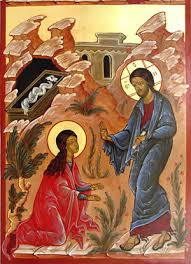
Icon written by Anne Davidson, Diocese of Western Michigan. Used with permission.

Sunday, April 30, 2023

4 Easter, 2023-A: On being sheep and shepherds

Lectionary: Acts 2:42-47; Psalm 23; 1 Peter 2:19-25; John 10:1-10 

En el nombre del Dios que es Trinidad en unidad. Amen. (Note: At the Rite II service, the preacher brings the children up for the demonstration…)


Long ago, I was a Brownie Girl Scout troop leader. As an expert in the field of child abuse prevention, I was called upon every year to help teach the Girls Scouts of all ages how to stay safe. I used the following demonstration to show them that there are some grown-ups who may try to trick them in order to harm them, and it works because they are the ones who are supposed to be looking out for them and their safety.

I would begin by tossing a coin, saying, Ok call it. Heads I win, Tails you lose. One child would call out “Heads!” and I’d say, Heads – I win! I’d’ toss it again and another child would call out, “Tails!” Tails, you lose, I’d say. It wasn’t long before the kiddos understood the trick.

In today’s gospel story, Jesus makes similar points about the Jewish leadership. It’s important to remember that this story follows the story of the man born blind whom Jesus healed. Remember how his parents hesitated to answer the questions, was your son really born blind and who healed him? It’s because they feared the Pharisees would excommunicate them for being followers of Jesus causing them to lose their family, friends, and community.

Jesus is connecting this moment in the gospel to the passage in Ezekiel where God called the leaders of Israel false shepherds who fed themselves and not the sheep whom they scattered leaving them vulnerable to predators. God declares “I myself will search for my sheep, rescue them, and feed them with good pasture. (34:11-16) Jesus was a masterful Biblical scholar.

Jesus identifies himself as the shepherd who enters by the gate. He is also the gate. This is his unique status as the Incarnate Word of God, and not surprisingly, the religious leaders don’t understand what he is saying.

There is so much beautiful imagery in this short parable that may go unnoticed by those of us unfamiliar with farming sheep. For instance, it wasn’t unusual for several flocks to gather in the same place for pasturing. I’m told this still happens in that region of the Middle East.

One wonders how, at the end of the day, the sheep will be separated back into their proper groups, but a shepherd knows that the relationship they build with their sheep is so personal that the sheep develop great trust in their shepherd over time. They also know the sheep trust each other, so if a group of sheep heads in one direction the rest will follow – herd mentality.

The sheep know their own shepherd’s voice and will follow it. I’m told it’s pretty amazing to watch this in real life – several flocks separating following their shepherd who goes in front of them to show them the way.

The shepherd leads their flock to the enclosed area where they will sleep for the night. Most shepherds would put planks across the gate to keep the sheep from walking back out during the night. But the really devoted shepherd would lay himself down across the gate and sleep there. That way no sheep could leave, nor a predator enter, without him knowing. Of course, lying across that gate also meant that the gatekeeper was vulnerable to the predators.

Jesus was claiming to be that sort of shepherd – the Good Shepherd who is willing to lay down his life for his sheep.

Jesus identifies himself as the gate as well and says that whoever enters by him will be saved. This is often taken as an exclusive comment, but it isn’t. Not if you believe in the Trinity, and consider what Jesus says a few verses later as he continues this teaching: “I have other sheep which are not of this fold, and I must bring them too. They will hear my voice and we will be one flock and one shepherd. (16)

Did you know that the word translated here as “saved” literally means to make sound, in good condition – free from injury or disease? It means to preserve someone from danger, loss, or destruction. Jesus is saying, “Whoever enters by me will be made sound, preserved from danger and destruction, but even more, they will be given freedom to come in and go out and find pasture” …the kind described so beautifully in Psalm 23.

We are the sheep who follow the voice of the Good Shepherd, and we are the shepherds in the world today as the church. It is now up to us to guard the gate – not to keep anyone out, but to make sure the gate opens every time a sheep comes in or goes out following the voice of God.

As shepherds in the world today, we are called to lay down our lives to protect the flock from those who would do them harm. The Emmanuel Black Lives Matter gathering every Friday night is doing that – taking insults and taunts directed at them as they stand for our African American sisters and brothers who suffer from continuing targeted racism in our culture and cultural systems.

In Missouri, there are currently over 40 anti-trans, and anti-LGBTQIA+ bills under consideration by our legislators. Churches United for Justice, a local group of faith communities, is watching that legislation, showing up to testify against it, and mobilizing people of faith to protect our vulnerable siblings-in-Christ who are being attacked culturally, medically, and personally. 

Within our own congregation are continuing expressions of fear over the potential for gun violence while we worship, run our preschool, and just go about our business as a Christian community of faith. I’ve counseled several women and one teen about the impact of the limits being imposed on women’s healthcare under the guise of “Christian values.”

As members of The Episcopal Church, we are out of step with the voices of false shepherds who benefit personally by fomenting fear, judgment, and condemnation of other members of the family of God they disapprove of or hate. Our Baptismal vows call us to respect the dignity of every human being and in our gospel story today, Jesus clarifies whose voice we are to follow – his, and his alone.

Luke tells us in Acts, that the early church “spent much time together in the temple.” We are called to do the same. The reason is, as Episcopalians, we discern the voice of God individually and in community. Hearing the voice individually only can lead us astray. False shepherds like David Koresh and Jim Jones thought they, and they alone, heard the voice of God. Look where that led. Our commitment to corporate discernment that affirms individual discernment is one of the planks we lay across the gate to protect our flock.

Listening for the voice of God is something we must choose to learn and practice, and church is where we do that. Some people worry about being able to recognize that it is God’s voice. It’s true, we are all vulnerable to temptation, but through his death and resurrection, Jesus defeated the power sin and death have over us. Do we believe that?

Do we believe that by his wounds we have been healed? Do we believe that having been marked as Christ’s own forever in our Baptism, there is nothing that can separate us from the eternal love and protection of God?

We can choose to walk away from God or the Church, mad about something, or disapproving of another thing. We can even choose to follow false shepherds who spin false narratives and employ threats, coercion, or cajoling; because the promise we cling to is that we are members of one flock, being constantly gathered back into the fold by our Good Shepherd.

The way of the world kills and destroys by infecting our hearts and our churches with fear, hate, and threat of abandonment. But our faith assures us that in the face of every earthly circumstance, we are not alone. We are in the eternal presence of God in Christ, who offers us abundant life; a life in verdant pastures, beside still waters, and lavish with blessings.

How can we help but share Good News like that? Amen.

Sunday, April 23, 2023

3 Easter, 2023: Inspired with hearts ready to serve

Lectionary: Acts 2:14a,36-41; Psalm 116:1-3, 10-17; 1 Peter 1:17-23; Luke 24:13-35 


I love this lectionary today. It is so full of inspiration and heart – and I use those terms intentionally because to be inspired is to be roused or urged to do or know something. Inspiration is something that comes to us from outside us but it is also an internal physical process. To inspire is to breathe in. To be inspired is to be breathed into. For us, it is God who inspires us, who breathes into us, compelling us to live, do, or understand something.

In modern culture, the heart is the seat of love and compassion. For those in Jesus’ time and place, however, the heart was the center and seat of thoughts. It was also considered the location of the soul. In other words, it is the place in our bodies where heaven and earth intersect. 

So when Jesus laments that the disciples on the road to Emmaus are slow of heart, he isn’t talking about them being slow to love, but slow to understand. So, he explains the Scriptures to them, beginning with Moses, interpreting everything everyone had said about the Messiah.

They still didn’t get it though, and it wasn’t because they were stupid or resistant. It was because it wasn’t time yet. They weren’t ready.

You see, it is God in Christ who acts to open our spiritual eyes and each of us is approached differently. Mary Magdalene’s moment of inspiration happened when Jesus spoke her name. Thomas was inspired when Jesus offered to let him touch his crucifixion wounds. God always meets us where we are and inspires us to move from unbelief to belief - in God's time.

When that happens we recognize and connect with God on a deep, interior level. In the midst of the beauty and glory of this personal connection, we experience a physical sensation, the first sign of the process of transformation happening within us and it happens in that physical spot in our bodies where heaven and earth intersect – in our hearts.

Our Scriptures, Old and New, show us that God has always done it this way. In Ezekiel, God says, “I will give you a new heart, and a new spirit I will put within you.” (36:26). In Jeremiah: “I will put my law within them, and I will write it ton their hearts.’” (31:33) This is what the disciples were experiencing when they said, “Were not our hearts burning within us while he was opening the Scriptures to us?”

The heart is where we co-exist, co-abide with God. It is a physical and spiritual reality that is made available for us to strengthen at every sharing of the Holy Eucharist. In the holy food of communion, we become one with the ultimate community, the community of the Divine Trinity. Jesus, the 2nd person of the Trinity, abides in us as we abide in him, making us the current locations of the coexistence of the human and the divine on earth.

The world tends to dismember us, to cut us off from God and one other. When that happens, we experience heartache. We all know how it feels to physically droop and spiritually sag under the weight of the turmoil in our world. As the psalmist says so well, “...the cords of death entangle me, the grip of the grave took hold of me. I came to grief and sorrow.” 

That’s been my experience watching the news this week. As I learned about Ralph Yarl, a bright, beautiful 16-year-old in Kansas City who rang the wrong doorbell and got shot for it and now struggles to live, and 20-year-old Kaylin Gillis, who was shot and killed when the car she was in went up the wrong driveway, I felt my heart break and my spirit sag. And these weren't the only innocent lives lost this week to guns.

Listening to the discussions about why some believe that everyone needs unlimited access to a gun and the legal right to “stand their ground,” my heart broke even more. How divided, how dismembered we have become.

God save us, I thought. Show us the way to go.

I’m grateful that preparing this sermon this week I was blessed to be reminded by the psalmist that God
hears the voice of our supplication. It enabled me to repent from my sadness and distress and return to the Lord, putting my trust once again in God’s love and loving plan for us.

Jesus knew this experience of worldly dismemberment too. He experienced it first-hand in Jerusalem when the shouts of “Hosanna “transformed into shouts of “Crucify him!” We watched as he physically drooped, falling three times as he carried his cross to Golgotha. We heard him spiritually sag as he cried out, “Eli, Eli, lama sabachthani…. My God, my God, why have you forsaken me?”

That’s why the risen Christ gave us a way to re-member ourselves, to put ourselves back together, to co-exist with God and one another in shalom. Every Sunday when we gather to worship, we intentionally breathe in the Spirit of God through our Scriptures, common prayers, and hymns of praise. We nourish and strengthen our souls with the holy food of Communion. Then we are made ready to breathe out the effects of this in our lives when we are dismissed at the end of our worship service to go in peace to love and serve the Lord.

If we don’t keep breathing it in, however, we can’t keep breathing it out. Coming to Sunday worship is not a duty (social or otherwise), and we don’t affect our eternal outcome by going or not going, but we do affect our present – understanding who we are, whose we are, and what our purpose is. 

 Being present at the Holy Eucharist opens our spiritual eyes and strengthens us, individually and as a community, to be witnesses of the Good News and stewards of the many gifts God has given us.

Jesus is the one through whom all things are made. All things, all people, all time, all activities, all of creation, all resources– everything comes from God and belongs to God. We are not asked to guard God or hoard God’s gifts. We are called to scatter them far and wide, welcoming all people – all people – to live as part of one family: the family of God. 

As Rabbi Lynn Gottlieb says in her book, She Who Dwells Within (Harper, San Francisco, 1995, 179), “Hospitality is the ability to give things away because one has replaced the idea of ownership with the idea of stewardship. A steward… equitably distributes that which is available… provides sanctuary and shelter, extends a warm welcome to her guest, and makes strangers feel at home.”

This is what church is meant to be, and do, and understand! And this hospitality is a gift Emmanuel has in abundance.

God is breathing life into us and we respond by living a Eucharistic life: a life of thanks and grace, a life that reflects our gratitude for all God has given us and demonstrates our commitment to using those gifts to serve God and all God’s people, welcoming and advocating for all suffering injustice or indignity, reconciling with all from whom we are divided or dismembered, and making them feel safe and at peace at our church home.

Let us pray… 

Eternal Reality, Creator of all that is, Opener of our spiritual eyes, and Inspirer our hearts, we willingly share your grief and sorrow each time one of your children suffers or dies as a result of our worldly dismemberment. Re-member us, we pray, Adonai-Shalom, Lord of our Peace, then send us out to be bearers of your life-giving presence to all we encounter, until your world is made one in the unity of your love. We pray this in the name of our Redeemer, Jesus the Christ. Amen.

Saturday, April 8, 2023

Easter, 2023-A: Set free to proclaim

Lectionary: Acts 10:34-43; Psalm 118:1-2, 14-24; Colossians 3:1-4; John 20:1-18

In John’s gospel account of the resurrection, Mary Magdalene goes alone to the tomb to finish the burial preparations interrupted by the Passover and sees that the tomb is already open. Keeping to the custom of her culture, Mary does not enter the tomb, but runs back to fetch Peter and John, who is the disciple Jesus loved. Mary, whose spiritual eyes had not yet been opened to the truth of the resurrection, informs the men that Jesus’ body was not in the tomb, supposing out loud that someone must have stolen it.


In our Bible study this week, we were pondering what Mary Magdalene might have been thinking in that moment – the great stone had been rolled away and someone had obviously been in the tomb… but they must not have been in a hurry because the burial linens were carefully placed here and there… anyway, who unwraps a dead body before stealing it? Suddenly, my watch Siri interrupted us saying, “I’m not sure I understand.” We broke up saying, neither do we, Siri. Neither do we.

When John arrives at the tomb, he looks inside, but he too waits until Peter, who held the top rung in the hierarchical ladder, catches up. When the two men entered the tomb and stood in its emptiness, they believed what Mary Magdalene had told them: Jesus was missing.

That’s a pretty radical statement for our Gospel writer to make considering that for them the testimony of women was considered unreliable. But Jesus made Mary’s testimony reliable.

Seeing the empty tomb, the disciples could only guess at what was going on “for as yet they didn’t understand the Scripture that he must rise from the dead.” The author tells us that Peter and John simply went home. Unable to leave the emptiness she didn’t quite understand, Mary Magdalene stayed outside the tomb weeping.

Unable to overcome the cultural barrier that kept her as an outsider, Mary still doesn’t go inside the tomb. Instead, she bends over to look inside it. When she does, she sees two angels in white who ask her a simple question: “Woman, why are you weeping?”

It’s helpful for us to remember that in those days men didn’t speak to women who weren't family. So, either the angels looked like women, or yet another barrier that impeded Mary’s call to be a witness to the Good News was brought down.

Then Mary turns around and sees a man standing near her. Motivated by her deep grief, and still unable to “see” the truth of the resurrection, Mary speaks to the man and another culture barrier comes tumbling down - the one that forbids women to speak to men.


"Sir," Mary says, if you have taken my Lord, please tell me where he is and “I’ll take him away.” Jesus replies by simply saying her name, “Mary,” and suddenly, her spiritual eyes are opened.

As promised, those who belong to the Good Shepherd know his voice. Mary spins back around to “look” again and sees – truly sees - her risen Lord. The very breath of life in Mary sighs his name using a term of endearment in their native tongue: “Rabbouni!”

In that moment, Mary’s understanding, along with her once broken heart, were made whole.

Jesus, her beloved Rabbi, is now Jesus, the risen Lord. She sees with her eyes. She understands with her spirit… and she believes with her whole self! Now she is ready to be a witness to the truth, and Jesus tells Mary to go and tell the others.

Our Easter experience today is spiritually the same as Mary Magdalene’s was that first Easter Day. We, like Mary, are called to go to the place where we will hear the Lord call our name, which opens our spiritual eyes. Then, we go when he sends us to tell everyone of the transforming Good News we know.

When my now 17-year-old mini-dachshund wore a younger girl’s clothes, she had a litter of puppies. I remember watching as my tiny dog’s belly swelled with the hidden life forming inside her.

My youngest child and I participated in the birth of those four new and precious lives. Then we watched as the puppies grew and formed into a community, a family, under the ever-vigilant and protective gaze of their mama-dog.

Soon, the puppies opened their eyes. They couldn’t see well at first, but little by little, experience and biology worked together, and their vision improved. And the better they could see, the more they began to explore, motivated by an endless curiosity, grounded in their sense of safety.

One of the puppies was braver than the rest. Following some interior call, he would venture out farther and farther from the birthing-box, and the others would follow him.

If one puppy got scared, he would stop where he was and let out a few cries. Either the Mama dog or another puppy would respond immediately by going up close, offering themselves as comfort to the one who was crying.

It was truly inspiring for me to watch the puppies grow in the newness of life that happened for them once their eyes were opened. The connection to our Easter story is easy to see.

After Mary Magdalene’s spiritual eyes were opened, Jesus cautions her to remember that her spiritual vision is young and still a little clouded. Don’t cling to me, he says to her. It isn’t about my returning to you, but about my returning you to God. So go and tell the others that “I am ascending to my father and your Father, to my God and your God.”

By sending Mary with this message, Jesus commissions her as the first resurrection apostle - an apostle is one who is sent on a mission. In doing so, Jesus finishes in his resurrection, what he started in his ministry: removing all of the barriers that oppress and hinder his chosen ones in their work as witnesses of the Good News. We too have been commissioned as resurrection apostles by our Baptism. And it is in Jesus that we are made to be reliable witnesses.

We too, have been set free from all that hinders us because Christ, who has been raised from the dead has brought us with him into resurrection life.

But what does that mean? When we leave here today, what does it mean to live in resurrection life? It means living in community where we gather to hear Jesus call our name, opening ourselves to spiritual awakening over and over again, remembering that once God opens our spiritual eyes, we need some time to mature before our vision becomes clear, and we do that as a family of faith.

As we learn and grow in our faith, we need our community around us. Not just for when we get scared, although that is important, but because with our friends nearby, we have the courage to explore beyond our comfortable boundaries to seek, find, and do the ministries God is calling us to do in this moment of our communal life. We learn together, confident that God is watching us vigilantly and protectively, ready to respond whenever we cry out.

So let us be like Mary Magdalene, bold witnesses to the Good News we know, trusting that Jesus will bring down all cultural barriers in our way. I mean… here I stand.

Let us proclaim to our trans and gay siblings the good news Peter first proclaimed that “God shows no partiality, but in every nation anyone who fears him and does what is right is acceptable to him.”

And let us preach “peace by Jesus Christ [who] is Lord of all…” In the Garden of Gethsemane, Jesus told us to put down our weapons or we would die by them. He was right, of course, and it’s a daily torment for us as our culture clings to its clouded understanding of this.

Finally, let us get about our work of “doing good and healing all who [are] oppressed,” as Jesus showed us how to do on Maundy Thursday, commanding us to serve humbly, as servant-leaders of our faith.

It is our turn - right now - to “testify that everyone who believes in Jesus receives forgiveness of sins through his name.”

For Episcopalians, being “saved” isn’t about keeping the right rules, or belonging to the right church, or having a culturally approved life-partner or gender identity. Being saved, as Jesus said so often, is about believing… believing in him. We don’t have to understand to believe. Understanding comes with time and experience and is always limited to our tiny human capacity. God is so much more than any of us can imagine or understand.

Here’s what matters: Jesus’ reconciliation of the world to God brings down all barriers that hinder our call to proclaim the Good News so that everyone can share the Easter reality, which we proclaim now together: Alleluia! Christ is risen! The Lord is risen indeed! Alleluia!