Sunday, March 6, 2022

1 Lent, 2022-C: Loving Lent

Lectionary: Deuteronomy 26:1-11; Romans 10:8b-13; Luke 4:1-13; Psalm 91:1-2, 9-16

En el nombre del Dios, que es Trinidad en unidad. Amen.

I’ve mentioned a few times that Lent is my favorite season, to which some of you have responded with surprise and confusion. I promised I’d clarify why Lent is my favorite season. Here’s a start...

If I could reduce the purpose and practice of Lent into a single idea, I would use this quote from a poem
by St. Theresa of Avila:“ [God] desired me, so I came close.” Here’s the fullness of that poem: 

A thousand souls hear [God’s] call every second, 
but most every one then looks into their life’s mirror and 
says, “I am not worthy to leave this sadness. 

When I first heard his courting song, I too 
looked at all I had done in my life 
and said, 

 “How can I gaze into his omnipresent eyes?” 
I spoke those words with all my heart, 

 but then He sang again, a song even sweeter, 
and when I tried to shame myself once more from His presence 
God showed me His compassion and spoke a divine truth, 

“I made you, dear, and all I made is perfect. 
Please come close, for I 
desire
you.”

It’s very sad to me that the pervasive notion about Lent is that it is a dark and difficult season, to be approached with dread, guilt, and sometimes even self-loathing; that we have to work to “tame” our desires by giving something up, then use all the self-control we can muster to keep our Lenten promises.

The irony is that exerting our self-will is exactly what we are called NOT to do during Lent. Lent isn’t meant to be a time of practicing self-control. It’s meant to be a time of relinquishing it.

During Lent, we practice discipline and repentance. It’s a mistake to confuse discipline with self-control and penitence with wallowing. In fact, it’s sin: the sin of hubris – the very thing that got Adam and Eve in trouble in the garden.

Our discipline and repentance are the means by which we re-enter the womb of God where we can rest, be restored, renewed, and prepared. In his book, “Praying Shapes Believing,” theologian Lee Mitchell reminds us that: “Joy, love, and renewal are as much Lenten themes as are penitence, fasting, and self-denial.” (29)

Temptation is anything that leads us into sin – and sin is that which causes us to forget who we are, whose we are, and why we’re here.

The gospel writer tells us that Jesus, the Incarnate One, the manifest reality of the unity of humanity and divinity, was tempted to forget his true identity and separate himself into a dichotomy of body and spirit. In the first temptation, Jesus was famished and he was tempted to focus only on his suffering earthly body.

Next, though he knew his divine purpose, Jesus was tempted to walk away from God’s plan for his life and live out a different plan – one in which he would get glory and avoid pain and humiliation.

Finally, Jesus was tempted to forget his relationship as the 2nd person in the Trinity and throw his earthly life away, daring God to prove to Jesus that he mattered by using divine intervention to save him; also daring Jesus to use his divinity to save himself.

We share with Jesus these temptations of identity, purpose, and relationship.

The first temptation, forgetting the divinity that dwells in us, goes to our very identity. We are embodied spirit. The actual coexistence of humanity and divinity was made manifest first in Jesus. Now each of us is a living testimony to that co-existence.

The second temptation, conceiving a plan for ourselves and putting that ahead of God’s plan for us, goes to how, or even whether, we will live into God’s purpose for us. If Jesus’ life is any indication (and it is), living into our divine purpose won’t be all blessing and honor, but it will be redemptive – for us and for the world.

When we’re honest, it seems ridiculous that we think we can devise a plan for happiness and fulfillment by chasing after the perfect life partner, the perfect body, the perfect job, car, home, or salary. That’s how the world tempts us away from our divine purpose, and about the only thing being fulfilled is the corporate bottom line.

The third temptation, testing God to prove we matter, goes to our core understanding of our relationship to God, one another, and ourselves. We are beloved of God. It’s true that many people don’t feel very beloved. Their earthly experiences have taught them to believe otherwise. But our faith assures us that God loves all God created. We will always have moments when we doubt that, or when it seems like God isn’t there so we have to rely on ourselves.

Learning to notice those moments of temptation, discovering what they look like for us and for our church, and repenting of them, that is, responding differently, is one of our goals during Lent.

For example, some of us eat, smoke, or drink to comfort ourselves. Repentance might involve attention to the stewardship of our physical bodies - noticing the physical signal that starts the process of filling an emptiness within us, then acknowledging the justifications as they speak in our thoughts (I can have this one cookie, or I deserve this drink) and responding differently - which is to say repenting - saying “no” to the temptation; saying “no” to the self, and living into the emptiness until it is redeemed by God.

Institutionally, this can look like trying to run a church as a successful business rather than as the mystical body of Christ in the world. Jesus was famished. The church will be too at times.

Others among us work too much in order to win approval or to feel like we matter. Institutionally, this can look like expecting too much work from church employees, misidentifying productivity with faithfulness or value. Repentance here might involve attention to the stewardship of our time and relationships - committing to and encouraging a schedule that balances time devoted to work, family, leisure, and includes time devoted to corporate and private worship of God. Lent is a good time to commit to regular attendance at Sunday worship or our Christian formation offerings through FaithQuest, remembering that we live out our purpose in community as the body of Christ in the world.

Some of us habitually deny ourselves anything good out of a sense of unworthiness or, at the other end of the spectrum, deny ourselves nothing from a sense of privilege. Repentance here might involve the stewardship of our spiritual lives - fasting from criticism of self or others, or keeping a prayer journal in which we acknowledge the daily gifts and blessings God is giving. Institutionally, this might look like trusting that God loves, sustains, and guides our church working through the servant-leaders God has called to serve here, from bishop, to clergy, to vestry, to the greatest and least among us.

The Lenten disciplines we practice are meant to help us enter humbly into the presence of God, where we surrender ourselves to God’s unfathomable love and unfailing care for us. The emptiness within us that continually seeks satisfaction comes from a deep sense of separation from that love. Lent is when we go to that scary place of emptiness, but we go there knowing that God desires communion with us and that Jesus came to make that happen – once for all.

Remembering that helps quiet those voices of temptation that play like a tape-recording in our heads, saying: you are not worthy or beautiful or gifted… you don’t matter to God or to the world… you are not loved. We are worthy, beautiful, and gifted, and we do matter. 

We’re also unfinished… continually growing and maturing in body and in spirit. Our brokenness is not something to be ashamed of or to avoid. It is as much a gift as any talent we possess because it is the place in us where God dwells most assuredly, most compassionately.

Our brokenness is the cross we bear; the place where we witness the redeeming love of God still at work in the world. When others see spiritual growth and maturation happening in our brokenness, they are empowered to stop being ashamed of their brokenness, pick up their own cross, and walk into redemption.

God desires us to come close and we hunger for that too. Bound together in the eternal love of God in Christ we discover love that protects, satisfies, and delivers us.

This is our Lenten journey, and this is just the beginning of why Lent is my favorite season. It’s a time of deep transformation for us in the womb of our living, real, and present God. God bless us as we begin it. Amen.

Sunday, February 20, 2022

7 Epiphany, 2022-C: Fastening our souls to God

Lectionary:Genesis 45:3-11, 15; Psalm 37:1-12, 41-42; 1 Corinthians 15:35-38,42-50; Luke 6:27-38 


En el nombre del Dios: que es trinidad en unidad. Amen. 

In our Collect today, we prayed that the Holy Spirit would come to us and pour into our hearts her greatest gift, which is love, the true bond of peace and the source of our life because outside of God’s love, there is no life, only death. 


As Episcopalians, we believe that God is love and that all life is created, sustained, and maintained by the
love of God. St. Julian of Norwich illustrates this beautifully using the image of a hazelnut saying, “I saw three properties about this tiny object. First, God had made it; second, God loves it; and third, that God keeps it…he is the Maker, the Keeper, the Lover.” She goes on to say that this revelation was meant to “teach our soul to cling fast to the goodness of God…[that] what delights [God] most, is when we pray simply trusting his goodness, holding on to him, relying upon his grace.” (John Skinner, ed., Revelation of Love, Julian of Norwich, 10-11)

Love requires relationship, and it begins with God. The Trinity of God is a dynamic relationship – an active, expressive, complementary way of being. Love reconciles, restoring harmony and wholeness, to whatever or whoever is separated or divided. Wherever God sees division, God acts to redeem, filling the gaps with God’s own self.

What is so important for us to remember as followers of Christ who embody his spirit, is that we are the current vehicles of this redeeming, reconciling love on earth. God looks through our eyes, responds in our hearts, and acts through our hands.

The word for love used in our gospel reading is Agape – a familiar word, I think, for most of us. Agape love is full of goodwill. It is deliberate – a choice to pay attention to someone else, have regard for them, and respect them. Agape love is reflected in our Baptismal vow to respect the dignity of every human being.

Agape love is also self-denying and compassionate. It places the other ahead of self. It joins us to another in their suffering because to have compassion is to suffer with someone. (Com = with, passio = suffer) Agape love means being willing to share someone else’s nightmare and bear light into their darkness – even when drawing near to them puts our comfort or our safety at risk.

Part of the problem is that we have only one word for the many faces of love. Agape love is not attraction – romantic or physical. That’s eros. It isn’t about liking someone. That’s philia. And it isn’t about being bonded by empathy. That’s storage.

In this teaching, Jesus is calling us to a particular kind of love: agape love. Theologian and author Allen Myers defines agape love as: “the divine, selfless love which will go to any length to attain the well-being of its object.” Myers, Allen C., The Eerdmans Bible Dictionary (Grand Rapids: William B. Eerdmans Publishing Company, 1987), 26. And we don’t have this kind of love unless God gives it, hence our prayer in our Collect today: pour into our hearts your greatest gift, God, which is love.

In this continuation of his beatitudes sermon, Jesus is teaching a new way for us to bear love into the world – one that goes against our natural inclination. Did you know that biologically, humans have a part of the brain specifically designed for making judgments? The role of this part of the brain is to divide input into binary categories that enable us to differentiate between what or who is safe and what or who isn’t.

It’s a built-in survival mechanism designed by a loving God by whom we are marvelously made. When fear and self-centeredness take over, however, this kind of bifurcation extends into our cultural consciousness and we find ourselves constantly challenged by our propensity to create categories of “us” and “them.”

Over time, prejudices develop around those categories. Soon the “other” becomes the enemy – which literally translated means, ‘not friend.’ This is the kind of judgment Jesus warns us against when he says, “Do not judge…”

It’s important to remember that in our gospel story Jesus is speaking to a people who are currently oppressed and know what it feels like to be hated, dismissed, ignored, and disrespected. They are the “them” in their culture and they’ve already had a long history of being the targets of oppression and genocide. They know who their enemy is.

To survive, they separated themselves, marking their separation with circumcision and ritual practice. Jesus is calling them (and us) to reconciliation rather than separation – even when that separation is meant to ensure our survival.

Jesus’ way of love calls us to trust God for all we need, including our survival. This is the kind of love that was demonstrated by Joseph in our reading from Genesis and it’s what the Psalmist is calling us to – a love that isn’t distracted by those who don’t love, tempting us to abandon our way of love.

Truly, none of us can do this easily or successfully all the time, but we know when we aren’t there, don’t we? We know when disdain or indifference or hate infect our hearts. We know when we allow unjust systems that benefit us to go unchallenged.

So what do we do? Well, we’re Episcopalians, so we pray together. In all our diversity, what unites us is our worship. So, we pray in community, drawing ourselves closer to God and nourishing ourselves with Word and Sacrament. Our common prayer opens a pathway for God to act in us and through us in the world.

As Julian says, “Prayer fastens the soul to God,” uniting our will to God’s will by “the deep inward working of the Holy Spirit.” In her vision, God spoke this to Julian: “Pray inwardly, even though you feel no joy in it. For it does good, though you feel nothing, see nothing, yes, even though you think you cannot pray. For when you are dry and empty, sick and weak, your prayers please me, though there be little enough to please you. All believing prayer is precious in my sight.'”

Prayer is how we cooperate with God in the continuing work of reconciliation. There are so many examples of this, but I’ll offer just this one: when we pray God’s lavish blessings over those we’d rather not love, that prayer changes us, enabling us to receive God’s greatest gift into our hearts. It allows us to draw nearer to them and establish relationship with them. Once that happens and we begin to know the person, we are set from the prejudices that held us bound and we are free to love.

When we separate ourselves from anyone or any group of people, it’s easy to depersonalize them and dismiss the fact that God’s spirit dwells in them. It’s easy to make them “other” and oppress them.

A glaring example of this is found in our own history: Article one, section two of the Constitution of the United States, ratified in 1788, declared that any person who was not free would be counted as three-fifths of a free individual for the purposes of determining congressional representation. The "Three-Fifths Clause" as it was known, thus increased the political power of slaveholding states furthering and justifying the oppression of African American people. There is currently legislation being considered that targets the rights of transgender people. It’s like we never learn…

We who follow Jesus know by our faith that we are loved, and from that eternal well of love there is endless refreshment. That’s why we can be the bearers of God’s redeeming, reconciling love into the world.

In Jesus' time as in our own time, the world doesn’t always welcome agape love. The systems of the world are designed to provide an elite few with power, privilege, and wealth. They don’t want to share opportunities or resources and they don’t want equality. Those benefitting from the unjust systems of the world will often kill the bearer of agape love knowing they pose a threat to the status quo, and they are prepared to work together to stop anyone who tries to take their prize from them.

Dr. King knew that. He talked about it in his last speech in Memphis. Like him, all bearers of agape love must trust God completely. We do not fear, because as Julian of Norwich says, “In [God’s] love [God] clothes us, enfolds us and embraces us; that tender love completely surrounds us, never to leave us.” (Feast of Anglican Spirituality, 137)

I close with a prayer from the Rev. Shaneequa Brokenleg, Racial Reconciliation Officer in the Diocese of South Dakota. Let us pray…

“Oh God of all comfort and giver of every good thing, we pray that you fill us with the desire to be your hands and feet in the world, so that the hungry are filled with good things and all may experience your reconciling love. Amen.” (The United Thank Offering Book of Prayers, 51)

Sunday, February 6, 2022

5 Epiphany, 22-C: Call and response

Lectionary: Isaiah 6:1-8, [9-13], Psalm 138; 1 Corinthians 15:1-11; Luke 5:1-11 


En el nombre del Dios que es trinidad en unidad. Amen.

We talk a lot in the church about being called, and most of the time we share a similar understanding of what that means. Through our prayer, through one another, through contemplative insight, through dreams, through repeated patterns in our experience – we feel God tapping us on our shoulder or nudging us from within to act as the ambassadors of Christ we are through our Baptism.

The choice is always ours whether or not to acknowledge that tap on the shoulder then consent or refuse to act on it. God never forces us, but God does keep on tapping - mostly gently, though sometimes we hear folks joke about needing to be clobbered by a spiritual 2’ x 4’ in order to pay attention.

That’s the key – learning to pay attention to the voice of God in the many ways God speaks to us. Our discernment, as I’ve mentioned before, is individual and corporate because, as theologian Terry Holmes said, Episcopal spirituality lives in the “tension between collective truth and individual insight.” and we continually discern the voice of God in both ways.

If we listen to today’s Scriptures only as stories about being called, or being obedient, or as a miracle story about fish, then we’ll miss the revelation they offer us about the nature of God who chooses to act in the world by calling imperfect, sinful people into intimate relationship for a purpose. We’ll miss the revelation about the character of God who provides for that called purpose with such abundance it’s almost ludicrous.

In Luke’s gospel today, we see both – the importance of trusting the voice of God when God speaks, especially when we’re tired and the request doesn’t make any sense to us. It also demonstrates God’s response to our faithfulness – a lavish, loving response.

Did the fish miracle actually happen? We could ask the same about most of the stories in our Scriptures. As Episcopalians, we rely on tradition as the context in which we interpret Scripture. Terry Holmes defines tradition as the passing “down from generation to generation within the community the church’s… understanding of God’s ways with humanity… [it] is the product of the ongoing reflection by the church of her experience of God, and consequently it is a living, changing body of thought.”

So, while Episcopalians reject Biblical literalism, we do take the Scriptures very seriously, including the miracles. People often try to explain the miracles in order to understand them, or they dismiss them completely. When we do that, however, we are attempting to shrink the ineffable into something comprehensible, forgetting what God said through the prophet Isaiah: “For my thoughts are not your thoughts, nor your ways my ways, says the Lord. For as the heavens are higher than the earth, so are my ways higher than your ways and my thoughts than your thoughts.” (55:8-9)

The catch of fish miracle, whether you interpret it as actual or symbolic, is about the nature and character of God, who is present in the person of Jesus, the Christ. It is also about our call to be in intimate relationship with God, to be made human bearers of the power of divine love on earth, partners in the continuing work of the reconciliation of the whole world to God.

The setting is the north part of the Sea of Galilee, which is actually a huge lake, near the region of Genessaret. Jesus is teaching on the lake’s shore and the crowd starts pressing in on him.

Noticing that there are two boats nearby, Jesus approaches the fishermen, who were cleaning their nets, and asks Simon Peter to take him out into the water. I’m told that preaching from the water in that part of the lake amplified the sound, making it easier for the gathered crowd to hear.

It would be understandable if Peter had resisted Jesus’ request. They were all tired, frustrated by their lack of catch, and ready to go home, but Peter responds in faith and does as Jesus asks.

Once they are a little bit away from the shore, the rabbi sits to continue his teaching. Now Peter is up close, watching Jesus preach and engage the crowds. He’s listening to Jesus as the word of God issues forth from this man who is already having such a strange effect on him. Something is happening in Peter, but what it is isn’t clear yet, so he watches, and listens, and waits.

When Jesus finishes his teaching, he asks Peter to head out to deep water and let down his nets again… the nets they’d just finished cleaning and stowing. Peter, who is an experienced fisherman, reminds Jesus, who is a carpenter, that they been out all night; and there were no fish to catch out there.

Yet, Peter obeys again. I want to point out that the word translated as “obey” literally means to hear and respond. Peter hears the call from Jesus and chooses to respond. The outcome was amazing: their nets captured so many fish that the other boat had to be called out to help them haul it all in.

Peter’s response to all of this was to fall to his knees aware of and confessing his sinfulness. When we are in the presence of the power, significance, and wholeness of God, we become keenly aware of how weak, insignificant, and broken we are by comparison.

Peter recognized this about himself and it drove him to his knees in humble surrender, crying out "Go away from me, Lord, for I am a sinful man!"

Jesus comforts Peter saying those words that always come from heaven right before a call is issued: “Do not be afraid.” Then Jesus issues Peter his divine purpose: “from now on,” he says, “you will be catching people.”

Notice that a call from God is a proclamation of a divine truth. Jesus didn’t say, “Hey, Peter, want to catch people with me?” He said this is who you are now – a catcher of people. Then through the course of his relationship with Jesus, Peter was formed, empowered, and equipped to answer this call, to live into his divine purpose, which he did, and it was amazing.

Scripture teaches us that there is a process that happens when God calls us, and it goes like this: God taps us on the shoulder or nudges us from within and we discern the call. We respectfully decline, believing we are not worthy or able to answer it. God comforts us, empowers us, and sends us. We obey and are amazed.

Discerning a call from God takes practice, like any other spiritual discipline. For a few of us, like Moses or Isaiah or Mary, God speaks the call plainly. For most of us, however, it will be a still, small voice, a nudging, a tap on the shoulder.

The noise of the world tends to drown out that still small voice, so it’s important to acknowledge the earthly judgment about hearing God’s voice. For some, it is a diagnosable event requiring psychiatric intervention, but for most of us, it’s a traditional means of conversation between the Creator and the created. We aren’t crazy when we hear the voice of God. We’re faithful.

That’s why our Episcopal approach to discernment in the tension between collective truth and individual insight matters. It is our continual calling as individuals and as a church community to listen for God’s proclamation of truth for us - who we are and what our divine purpose is in this place and time.

If we choose to pay attention to God’s call to us and obey it, God will form us, empower us, equip us through the church, and send us out - and it will be amazing. Amen.

Sunday, January 30, 2022

4 Epiphany and Annual Meeting, 2022-C: Forward in faith and ministry

Lectionary:Jeremiah 1:4-10; Psalm 71:1-6; 1 Corinthians 13:1-13; Luke 4:21-30 


En el nombre del Dios que es trinidad en unidad. Amen. 

Mother Theresa of Calcutta once said, “Love has no meaning if it isn’t shared. Love has to be put into action.”* That’s exactly what we see happening in today’s Gospel reading from Luke, which picks up the story right where we left off last week.

Having read from the scroll of Isaiah, Jesus begins his sermon saying, “Today this scripture has been fulfilled in your hearing.” (4:21) At first, the congregation is very pleased. The people love reveling in the success of their hometown hero.

Jesus’ reputation in Capernaum has earned him great respect throughout the region. He’s a celebrity of sorts, and his hometown peeps are filled with pride. Luke says, “All spoke well of him and were amazed at the gracious words that came from his mouth.” (4:22)

God’s promises of mercy and salvation are about to come true - finally! - and their own son will see to it that they get the reward promised throughout the ages. They have an inside connection and they’re ready to reap the benefits. **

Sensing this, Jesus says, you probably want me to do here the things I did in Capernaum, but the truth is: God’s promised mercy and salvation will reach beyond the Jewish people to all people. Then he illustrates this truth using two stories from their tradition: the story of the prophet Elijah healing the widow at Zarapheth and the story of the prophet Elisha healing Namaan, the Syrian. Both the widow and Naaman were outsiders, Gentiles who received God’s mercy and healing, while faithful Jews suffered and died all around them.

Well, this was not what Jesus’ homeys wanted to hear and certainly not from him. Jesus acknowledged that he would have no honor in his hometown where they remember the scandal of his birth. When they asked, “Is this not Joseph’s son?” they were subtly (and uncharitably) reminding everyone of the shameful reality that Jesus’ mother was pregnant before she was married, and that Joseph wasn’t Jesus’ real dad.

Why? Because Jesus smacked down their expectation that if God’s promises were to be fulfilled, they would be fulfilled for them – the Jewish people. They are God’s chosen, and they along with their ancestors have been faithful for generations. The prize belongs to them, and they aren’t about to let it be given to the unclean unbelievers who had done nothing to earn it.

If we pause here for a moment, we can see what their unbelief looks like. Salvation isn’t earned, it’s a free gift from a loving God, but the congregation in this synagogue in Nazareth overlook that inconvenient point because it doesn’t fit their expectations. Yet, the truth Jesus is speaking is in the very scroll he read from: the scroll of Isaiah, where God said: “It is too light a thing that you should be my servant to raise up the tribes of Jacob and to restore the survivors of Israel; I will give you as a light to the nations, that my salvation may reach to the end of the earth.” (Isaiah 49:6)

That inconvenient truth didn’t sit well with some of Jesus’ listeners, and they reacted with a turbulent commotion (here translated as “enraged”). Some even tried to hurl Jesus off a cliff.

Isn’t it interesting that when Jesus is faced with this turbulent and potentially violent commotion, he simply passes through the midst of it and goes on his way? That gives us hope for our time. Despite the attempts by some people today to hurl the truth off the cliff, God simply continues undaunted on the path to redemption.

St. Paul makes clear that followers of the Way of Jesus don’t throw the truth or truth tellers off the proverbial cliff. If only. Just last week we celebrated a national holiday honoring another prophet, Dr. Martin Luther King, Jr., who we threw off that proverbial cliff.

Jerusalem has a reputation for killing its prophets. Sadly, so do we.

So then, how do we tell the difference between a true and a false prophet, between the divine Truth of God and a “truth” of our own devising? We do as Jesus did. We go to our Scriptures and we remember to look at the whole story, the big picture of God’s message of redeeming, reconciling love.

As Episcopalians, we also go to our faith community knowing that God speaks through the community as well as the individual. Community discernment keeps us from getting lost or led astray by a “truth” of our own or someone else's devising.

St. Paul’s epistle reminds us that no amount of prophetic power or faith or knowledge is worth anything in the absence of love, which he so beautifully defines as kind, not envious or boastful or arrogant or rude. Love, he says, does not insist on its own way; it is not irritable or resentful. (13:4-5)

Clearly, Paul didn’t spend any time on social media! We live in a time when we’ve normalized or at least become tolerant of saying just about anything, no matter how arrogant or rude, harsh, or even cruel. On social media and in person, yes – even in churches, tempers flare with amazing rapidity with little to no accountability for the harm done.

This is important because as followers of Christ we are all prophets, and the truth we proclaim is him. Jesus is the Way, the Truth, and the Life. (Jn 14:6)

If we know the truth of our salvation in Jesus Christ then we must also be compelled to speak it, not in a Bible-thumping, brimstone kind of way. Episcopalians don’t go for that. Neither did Jesus.

Jesus spoke prophetically but he never forced or threatened anyone into believing. He also accepted the consequences of his prophetic ministry knowing that speaking the truth meant some people weren’t going to like him.

Most of us have a hard time letting people dislike or hate us without trying to fix it - but we aren’t called to fix it, and we aren’t called to be liked. We’re called to be prophets of the truth of God in Christ, and we’re called to do that in love, trusting God to be with us, to guide us, and to speak through us.

If God is going to speak through us, however, we’re going to have to let go and give the Holy Spirit total freedom to transform us. We also need to participate in church, because it is the church’s role to equip us to be sent into the world to share the good news we know. We need to be willing to accept the consequences of our prophetic ministry knowing that the gospel of mercy, forgiveness, and inclusion isn’t good news to everyone, especially the earthly powers that be.

Thankfully, we don’t do any of this alone. We do it together as a community: a parish, which is part of a diocese, which is part of a worldwide communion. We do it in the company of the saints who went before us and proclaimed the same truth in their time.

Today, at our Annual Meeting, we will celebrate our parish community and the imperfect but beloved institution that carries us ever forward in faith and ministry. I want to share a story about how that looks right now at Emmanuel.

Last Sunday, Bishop Deon wore this chasuble when he celebrated Holy Eucharist with us. The chasuble was designed by one of our members to honor another member who had died of AIDS. The family of this man wrote to me and said, “32 years after his death from AIDS, a joyful and openly gay man was leading worship at Emmanuel's altar…. My, how the world has changed! Thanks be to God.”

Thanks be to God indeed. As Bishop Deon said last week, it isn’t that long ago that he couldn’t have been ordained a priest, much less a bishop. The same is true for me as a woman. But God, who is love, carries the Church forward in faith and ministry, passing through the midst of all the turbulent commotion it faces on any and every issue.

As a parish community, therefore, we can trust that God is always with us, guiding and leading us onto the path of redemption, where we find healing and life, enabling us to put God’s love into action in the world. Amen.


* Lucinda Vardey, editor, Mother Theresa Meditations from A Simple Path (Ballentine Books, NY, 1996), 57.
** New Interpreter’s Bible Commentary, CD-Rom version, Vol. IX, 107.

Sunday, January 16, 2022

2nd Epiphany: Next steps for the next-born

Lectionary: Isaiah 62:1-5; Psalm 36:5-10; 1 Corinthians 12:1-11; John 2:1-11 


En el nombre del Dios: Padre, Hijo, y Espiritu Santo. Amen.

Our reading today from Isaiah has the prophet clarifying in no uncertain terms the identity and destiny of the people of God. Isaiah tells them how much God loves them and that God’s purpose for them will be fulfilled in and through them despite how impossible that seems in the difficult circumstances they are experiencing.

In this passage, love compels God to promise: ‘I will not keep silent or rest until you, my delight, my crown of beauty shine with the fiery glow of freedom. Your oneness with me will be so apparent that everyone will see it and you’ll have a new name, a new identity. You’ll become known as those in whom I delight.’

One of the blessings of our life together right now at the start of 2022, is that we too are being given a new identity which is grounded in our relationship with God, one another, and the neighbors among whom God has placed us. However we may have been known before, our new identity will be the result of what people see in us now. God’s promise as we proceed in this rebirth, is that we will become known as that church in whom God delights.

Isaiah talks about this relationship between God and God’s people in terms of a marriage – an intimate union where separate lives become one in identity and purpose. As it says in our marriage rite, this union is intended by God for the mutual joy of those bonded together. We know bonding with God brings us joy, but how lovely is it to consider that bonding with us brings God joy?

The gospel story picks up on this metaphor in the story of the wedding at Cana. Jesus is at an ordinary event: a village wedding, which becomes the setting for an extraordinary event: the first manifest sign of the intimate union of the human and the divine in Jesus and what that means for the world.

Mary, Jesus’ mother, notices that the wine has run out - something that would cause public shame for the host family. Mary was paying attention. She noticed what was happening around her and cared about how it would affect her neighbors. In order to protect their dignity (remembering here our own Baptismal vow to respect the dignity of every human being), Mary intervened risking her own moment of public humiliation as a woman.

Jesus’ response, as rude as it may sound to us now, was a typical response for an adult male of that time, firmly ensconced in his culture’s understanding of male-gender superiority: “Woman…” he says, addressing Mary as his inferior, not as his mother, “…what business is that of mine? My hour has not yet come.” Well, that’s what Jesus thought anyway, but apparently, his mother knew better.

Undaunted and unashamed, Mary tells the servants, “Do whatever he tells you.”

Obeying his mother, Jesus tells the servants to fill the water jars with water, then bring a taste of it to the master of the feast, who was kind of like Downton Abbey’s Mr. Carson at the party. To everyone’s surprise, the water had been turned into wine. But more than that, this wine was of the finest quality and it was in ridiculous abundance which is how the generous love of God works. Importantly, this new relationship of divine-human union demonstrates how the love of God is manifested in the world through human hands, first in Jesus, and now in us.

The story of the wedding at Cana seems at first like a simple event. There’s a wedding, the wine runs out, Jesus is there, so he makes more miraculously - but it is so much more than that. This story marks the beginning of the revelation of Jesus as the Messiah of God. Jesus shows himself to be the “firstborn” – the first fruit of this real and intimate union of the divine and human.

It’s also the beginning of the revelation of how God in Christ does things and how that will transform the world. Stepping down from his lofty position of male privilege, Jesus humbly and publicly obeys his mother which not only bends cultural norms, but also reveals how we, the next-born of this real and intimate union of the divine and human, can transform the world.

Mary’s voice is echoed in something Dr. Martin Luther King, Jr. once said: “Life’s most persistent and urgent question is, ‘What are you doing for others?’”

There are people right now in our neighborhoods who “have no wine” - students, the working poor, the unhoused, to name just a few. This is why we too can’t keep silent; why we can’t rest.

As we celebrate Martin Luther King Day tomorrow, it’s important for us to say out loud, in here, that racism is real, it violates our Baptismal vows to seek and serve Christ in all persons and to respect the dignity of every human being, and it is a cancer in our culture. Therefore, I want to thank our intrepid members who do not keep silent or rest but hold a vigil every Friday night proclaiming that “Black Lives Matter.”

It’s also important to celebrate the Food Ministry at Emmanuel that gives generously, and with all the abundance we have, to anyone who is in need. It may be called a food ministry but it is so much more than that, because our ministers give out food, friendship, emergency assistance, and most of all – dignity, as they faithfully serve our neighbors who “have no wine.”

We have been chosen by God and gifted by the Holy Spirit for a purpose. We are a crown of beauty, a royal diadem in the hand of God, and our hour has come.

My prayer is that we allow the fullness of God’s love which dwells in us to radiate with the brightness of Christ’s glory as we serve in his holy name. I pray we recognize, nurture, and use our many gifts because so many of our sisters and brothers out there have no wine.

I know some may not feel ready. We live in a time of uncertainty both interiorly as we find our rhythms with new clergy leadership, and exteriorly as the COVID variants surge among us. But as Dr. King reminds us, faith “is taking the first step even when you don’t see the whole staircase.” In fact, we will never see the whole staircase - that’s God’s domain.

Our first steps will become clearer following our vestry retreat in which your elected servant-leaders, followed by the parish as a whole, will discern our spiritual gifts. Then we will prayerfully discern God’s purpose for gathering these particular people bearing these particular gifts at this particular time into the Emmanuel community – knowing it is, as St. Paul says, for the common good.

We know that by taking these steps for the welfare of those who “have no wine,” we will like Mary did, put ourselves at risk of public shame. Dr. King was no stranger to that either. Did you know that following his “I Have a Dream” speech, the FBI sent the president a 64-page memo which contained the following? 

 “In the light of King’s powerful demagogic speech yesterday he stands heads and shoulders over all other Negro leaders put together when it comes to influencing great masses of Negros. We must mark him now, if we have not done so before, as the most dangerous Negro of the future in this nation from the standpoint of communism, the Negro, and national security.”  Source: “Broken, The Troubled Past and Uncertain Future of the FBI” by Richard Gid Powers, (Free Press, NY, 2004), 251. 

The powers of the world look at the voices of love with suspicious, fearful eyes, knowing those voices can influence people to transform the world.

A few years ago during Lent I practiced a spiritual discipline of smiling – something I always need to do more of. I was surprised at how many people found that suspicious.

As the days of Lent went on, I was intentional not just about smiling, but about finding the person whose face was screwed up into a scowl, or who had the saddest or weariest expression, and smile at them.

I still was often met with suspicion, but every once in a while, someone smiled back at me and a connection was made. As fleeting as that moment may have been, there was an eternal connection made: human to human, wrapped up together in a moment of divine love.

What happened as a result of those connections is staircase stuff – God’s domain. Being true to the steps God was asking me to take was my domain.

We who are followers of Jesus are the next-born of the divine-human union begun in him, and we shine with the radiance of his glory so that the whole world may know the steadfast, caring, intimate love of God for all creation. I can testify that this radiance is a gift in abundance here at Emmanuel and our hour has come.

Our union with God compels us to make connections: human to human, wrapped up in divine love. It is our identity… our destiny. God bless us as we obey and take our next steps together. Amen.

Sunday, January 9, 2022

Epiphany (transf) and Baptism, 2022: Followers and bearers of the Light

 Lectionary: Isaiah 60:1-6; Psalm 72:1-7,10-14; Ephesians 3:1-12; Matthew 2:1-12 


En el nombre del Dios, que es Trinidad en unidad. Amen. 

Today is the transferred feast of the Epiphany, which marks the end of the season of Christmas. Some Episcopalians follow the celebration of Holy Eucharist on this day with a de-greening of the church and a burning of those greens. It’s beautiful symbolism – and besides, who doesn’t love a good bonfire?!

Picture it - standing in the presence of the great light of an Epiphany fire and feeling its warmth and power. It is a true manifestation of the message of this day, and it connects us to our forebears. First, there were the Israelites, who followed the pillar of light during their 40-year exile in the desert. Then the shepherds who followed the light of the star to Bethlehem to where the baby Jesus had just been born.

It also connects us to the experience of the magi, who, as Matthew tells us, traveled a great distance following the light of an unusual star in the heavens. These visitors were probably Zoroastrians, members of a religious group who studied the stars. They also interpreted dreams.

According to Zoroastrian belief, every person is connected to a star. The appearance of this unusual and magnificent star signified the birth of an unusual and magnificent person. It was so compelling to them that they packed up their camels, loaded up their treasure chests, and headed out to find the person connected to this amazing star. How far they traveled and how long it took is unclear, but it was anywhere
from 500 miles, which would take a few months, to thousands of miles taking a couple of years.

Matthew, who is Jewish, calls these visitors “magi.” This is significant. Magi is the source of our words “magic” and “magician.” They were thought of as sorcerers in their time and they would have been looked at with suspicion, even contempt, by faithful Jews. The Magi were foreigners, Gentiles, and sorcerers – outsiders in every way, yet they too were drawn to see the Messiah.


The hymn tells us there were three magi, but we don’t actually know how many people were in the magi’s caravan. Scripture tells us there were three gifts – gold, frankincense, and myrrh. The traditional names of the three wise men: Caspar, Melchior, and Balthasar, first turned up in a 5th-century Greek manuscript and later in a 6th century mosaic in an Italian church. If you used the chalking of the door liturgy I sent out,you might have noticed that the “code” includes the letters C, M, and B – which some say refer to Caspar, Melchior, and Balthasar, but actually refer to the Latin phrase, “Christus Mansionem Benedicat” which means “Christ Bless this House.”

When the magi caravan saw that the star had stopped, they, like the shepherds, were overwhelmed with joy. When Mary and Joseph welcomed the magi into their house, a breach of protocol on their part yet again, the visitors saw the baby Jesus and fell to their knees, paying homage to him and offering him gifts.

This is a powerful moment in the story as it is the moment the light of Christ caused a historical wall to come tumbling down – the wall between the Jews and Gentiles, insiders and outsiders. In this moment, God established a divine unity where there had been centuries of human division.

The gifts the magi offered baby Jesus were those typically given to a king: gold – which is a symbol of earthly wealth and power; frankincense - a symbol of spiritual power, used in the anointing of kings and priests; and myrrh - an expensive plant extract used by royalty as a perfume or medicine. It is also used to prepare a body for burial.

Matthew ends the story by telling us that the magi went home a different way, having heard in a dream that they should not return to Herod. As I mentioned before, the magi were interpreters of dreams, but I often wonder, did they all have the same dream? We don’t know, Scripture doesn’t tell us; but we do know that nothing is impossible for God, who guided these “non-believers” and remarkably, they listened and obeyed, openly defying human political authority and putting themselves at risk of attack.

The world has always been difficult to navigate. For us, the COVID pandemic marches on with variants challenging our COVID fatigue to the limits. Fear continues to challenge our faith, as Rev. Sujanna said last week in her sermon. Though our path forward is uncertain at times, we know we can trust the Light who leads us, and so we are compelled to go on – together – as a community, a family of faith who are both followers of and bearers of the light of Christ.

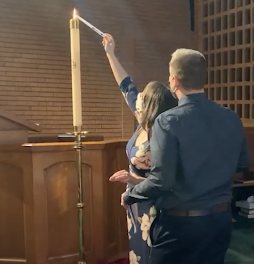
Today, we have the joy and privilege of adding another member to the Christian community in the family of faith here at Emmanuel: Owen Francis Smith who will be baptized in a moment. Each time we baptize a child of God, the priest proclaims: “receive the light of Christ” as their baptismal candle is lit from the Paschal candle.

The godparents symbolically hold that light until Owen can hold it for himself. In the meantime, we all promise to help Owen learn how to be a follower and bearer of the light of Christ, and we pledge to help him understand the power and the warmth of the light he is being given.

The light of Christ is no small thing - for Owen or for us. The power of it continues to break into the darkness of the world enlightening it as its warmth divinely gathers and unifies those whom the world has divided until all are one body, one spirit, one family in God.

It’s also no small thing that we have been chosen by God to be followers and bearers of this light. As we baptize Owen, may we all recommit ourselves to the life of grace that is the gift of Baptism… a life that sees and shares joy and wonder in all God’s works. Amen.

Saturday, December 25, 2021

Christmas Day & Baptism, 2021-C: Extravagant love

Lectionary: Isaiah 9:2-7, Psalm 96, Titus 2:11-14, Luke 2: 1-20 


En el nombre del Dios, que es Trinidad en Unidad. Amen. 

As a former marketer, I love a good TV commercial. One of my all-time favorite commercial series was called “Frogs (Boys night in).” It came out about a decade ago but the tagline echoes in my thoughts today, especially today as we prepare to Baptize Amelia.

In this commercial, you see a picture of some men playing cards as a voice is saying, “There was a time when poker night was what you looked forward to all week.” Then the picture changes to one of those men holding his baby on his couch., and the voice says, “So who’d have ever thought boys’ night out wouldn’t hold a candle to boys’ night in? Having a baby changes everything.”

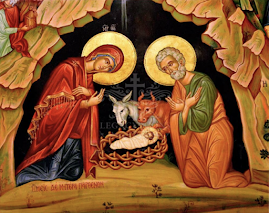
The biggest thing to ever happen in the history of human experience came to us as a baby. Born to a poor, young peasant woman, in a barn in a remote village in the Middle East - this baby changed everything, forevermore.

Sometimes, the Christmas story is so familiar, so sanitized that we forget the harsh reality of it. Mary and Joseph traveled 90 miles to register as a family in Bethlehem according to the law. She was 9 months pregnant… On a donkey… for 90 miles….

When they finally get to Bethlehem Joseph’s people turned them away claiming there was no room in their guest quarters. Since Mary was pregnant before she and Joseph had married, it’s likely they were sent in their shame to the barn, and Mary’s baby had to be born among the animals. Nothing was sterilized. No one came to help them or feed them.

It must have been so scary for them. But then… there he was. The baby conceived by the overshadowing of God was born. They swaddled him so he felt safe, talked to him so he didn’t feel alone, and Mary fed him so he could be content and sleep.

Mary, who was probably only 14 years old, had to figure out how to nurse her newborn. As most mothers know, newborn babies don’t always latch at first and we often need help getting that going. Joseph had to make sure the afterbirth was delivered completely so Mary didn’t bleed to death, and how many of us would know how to intervene with an afterbirth hemorrhage?

It must have been so lonely for them. I hope there was a quiet moment, after the baby Jesus was born, cleaned, nursed, and resting that Mary and Joseph could revel in what just happened. They knew that this baby was about to change everything.

But I wonder, don’t all babies change everything – in that ‘flutter of a butterfly wing affecting global weather systems’ kind of way? It may be inaccurate science, but it’s good theology. Every one of us is born with a divine purpose. We are unique and uniquely gifted by God and sent into the world to discover and fulfill that purpose.

It’s why our faith community matters so much. When we baptize someone, we are welcoming them into a community that will love them, notice their gifts and passions, nourish them, train them up, then trust them to use those gifts in service to God and God’s people.

The primary role of a faith community is to promote, embody, and increase the establishment of love: God’s love for us, our love for one another, and our love for ourselves, in all our diversity, knowing God created us exactly as we are and has a purpose for us.

Mother Theresa of Calcutta once said, “If you know how much God is in love with you, you can’t help but live your life radiating that love.” It’s our goal as Christians to live our lives like that.

Luke says an angel of the Lord appeared to some shepherds in the fields and told them of the birth of the Savior. For most of us, this brings to our minds a sweet, pastoral image of men sitting on the grass watching over their sheep who graze peacefully unaware. The reality, however, was a little different. Shepherds were generally scorned as shiftless and were sometimes hated because they would graze their flocks on other people’s land without permission. They didn’t bathe much so they didn’t smell good and people typically just avoided them. In addition, these particular shepherds were the lowest of the low… working the graveyard shift.

But God, who sees differently than the world does, chose these lowly shepherds to be the first humans to hear the good news that the Messiah of the world had been born in Bethlehem. The shepherds rushed off to find this child, then ran home to tell everyone they knew about it “…and all who heard it were amazed.”

They must have radiated their good news because everyone who saw them was astounded by what they heard. What if we radiated our Good News the way they did?

Angels don’t need to come and tell us about Jesus anymore because he lives in us. The good news of Christmas is not just an ancient story we remember together, it’s a truth we live today. Christ is born in us, dwells in us, heals and loves through us - now - and baptizing a baby on this day is the perfect manifestation of that truth.

New life, actual new life, is being baptized today in the extravagant love of God in Christ by her loving family in the presence of her loving faith community – and that is the radical truth of Christmas: extravagant love.

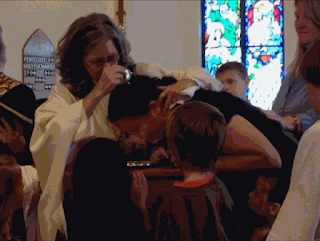
On that first Christmas, God took the form of the smallest and the least - a baby who changed everything. Today, we have the joy and privilege of welcoming Amelia, into the Christian family, in the sacrament of Baptism, whereby she will be marked as Christ’s own forever. May her life, her love change everything.


(The Celebrant invites the candidate for Baptism to the font).